
You're probably here because you've picked a colour, maybe even narrowed it to a specific Dulux or Haymes swatch, and then hit the next hurdle: matte, low sheen, satin, semi-gloss, gloss. On site, that's one of the most common points where Melbourne clients pause. They can picture the colour. They're less sure how the finish will behave once the room is lived in.
That hesitation makes sense. The finishes of paint affect far more than appearance. They change how much light bounces around the room, how clearly wall imperfections show up, how easy marks are to wipe off, and how well the coating handles steam, moisture, fingers, bags, pets, chairs, and everyday traffic. In older Victorian homes, the wrong sheen can make every patch and ripple obvious. In a west-facing apartment, it can make a perfectly decent wall look uneven by late afternoon. In a rental, it can mean the difference between a quick clean and another repaint.
It's a similar decision process to flooring. If you're weighing durability against appearance under different lighting, this guide on choosing floor finish for Long Island homes is a useful parallel. Different surface, same practical question: what looks right on day one, and what still works after real use.
Table of Contents
- Choosing the Right Paint Finish for Your Home
- The Paint Sheen Spectrum From Matte to High-Gloss
- How to Match Paint Finishes to Rooms and Surfaces
- Choosing Finishes for Melbourne Exteriors
- Beyond Standard Paint Specialty and Architectural Finishes
- Why Preparation is Crucial for a Perfect Finish
- Your Paint Finish Questions Answered
- What's the safest paint finish for pre-sale painting in Melbourne
- Are matte finishes a bad idea in family homes or rentals
- Can you paint over old gloss paint
- What finish works best in older Victorian homes
- Should walls trim and cabinets all use the same finish
- How do I get a quote that actually specifies the finish
Choosing the Right Paint Finish for Your Home
A finish decision usually starts the same way. A homeowner says they want something “not too shiny,” but they also want walls that clean easily, don't show every dent, and still look fresh in a few years. Those goals can conflict.
In Melbourne homes, the answer often depends on what the room has to deal with. A front lounge in a Victorian terrace needs a different approach from a rental hallway, a kitchen near the cooktop, or an apartment bathroom with regular steam. The finish has to suit the surface condition, the light, and how the room is used.
Practical rule: Choose sheen for the room's wear and the wall's condition, not just for the sample card description.
That's why painters don't treat sheen as a decorative extra. It's part of the specification. Lower-sheen finishes usually help where concealment matters. Mid and higher sheens come into play where cleaning and durability matter more.
A good finish choice should answer four questions:
- How much light hits the surface. Strong natural light can exaggerate reflection.
- How smooth the substrate is. Older plaster and patched walls rarely suit high reflectivity.
- How often the area gets touched or cleaned. Hallways, kids' rooms, rentals and kitchens wear differently.
- Whether moisture is part of daily use. Bathrooms, laundries and some kitchens need a more practical film.
If you're planning interior painting or a full house painting project, sheen should be discussed at the quote stage, not on the morning the paint goes on.
The Paint Sheen Spectrum From Matte to High-Gloss
What painters mean by sheen and gloss
A finish chart looks straightforward until the paint is on the wall at 4 pm in a west-facing Melbourne room. That is when the significant difference shows up. The same colour can read soft and even in matte, then suddenly pick up every patch and trowel mark in a higher sheen once the afternoon sun hits it.
In paint terms, gloss and sheen are measured differently. Industry guidance explains that gloss is typically measured at a 60-degree angle, while sheen is measured at 85 degrees, which helps painters and specifiers compare finishes more accurately using ASTM D523 benchmark language.
On site, the practical point is simpler. Product names are only a guide. One brand's low sheen can look flatter than another brand's low sheen, and that difference matters in older Victorian and Federation homes where walls are rarely perfect.
How each finish behaves on the wall
Matte or flat has the lowest reflectivity. It absorbs light rather than bouncing it back, so it does a better job of hiding old plaster irregularities, patch repairs and light surface movement. In many older Melbourne homes, that makes it the safest wall finish when appearance matters more than scrub resistance.
Low sheen or eggshell gives a bit more light return without pushing every defect forward. For a lot of homes, this is the practical middle ground. It is often the best answer when you want walls to look clean and current for pre-sale presentation but do not want the extra reflection that makes imperfections stand out.
Satin moves into a tougher, more washable category. I usually reserve it for spaces that need regular wiping or for rental properties where walls cop more contact than an owner-occupied formal lounge. The trade-off is clear. You get easier maintenance, but you also get more visibility on sanding marks, plaster joins and older substrate inconsistencies.
Semi-gloss is commonly used on trim, doors and wet-area elements because it forms a tighter, easier-cleaned surface. In bathrooms, laundries and some kitchen joinery, that added sheen can make sense, especially where moisture and frequent cleaning are part of normal use. If you are comparing options for wet areas, this guide on choosing the right bathroom paint explains the product side in more detail.
Gloss or high-gloss sits at the top end. It is durable, sharp-looking and easy to wipe down, but it is unforgiving. On a well-prepared front door, custom cabinetry or detailed timberwork, it can look excellent. On broad wall areas or older trim with years of patching underneath, it usually creates more problems than it solves.
One step up in sheen often means one step down in forgiveness.
Paint Sheen Comparison Guide
| Sheen | Reflectivity | Best For | Pros | Cons |
|---|---|---|---|---|
| Matte or Flat | Very low | Bedrooms, ceilings, older walls, low-wear living spaces | Hides defects well, softer look | Harder to clean, less suited to high-moisture or high-traffic use |
| Low Sheen or Eggshell | Low | Living rooms, dining rooms, bedrooms, better-quality hall walls | Good balance of appearance and practicality | Can still mark in busy areas |
| Satin | Medium | Hallways, family rooms, some kitchens, rental interiors | Better washability, more durable | Starts to reveal more wall irregularities |
| Semi-Gloss | Medium-high | Doors, skirting, architraves, bathrooms, laundries | Easier cleaning, tougher film | Highlights patching, joins and sanding issues |
| Gloss or High-Gloss | High | Trim, cabinets, feature joinery | Most reflective, hard-wearing, easy to wipe | Shows flaws clearly, less forgiving to apply |
A common mistake is using one sheen throughout the whole house to keep the selection process simple. It rarely gives the best result. Broad wall areas, rental wear points, period-home plaster and trim all ask for different things.
For Melbourne homes, the deciding factors are usually light, surface quality and how hard the area has to work. West-facing rooms often benefit from lower reflectivity. Older walls usually look better in flatter finishes. Rental properties and family traffic often justify stepping up the sheen where cleaning matters. If the home is heading to market, buyers generally respond better to walls that look even and calm, with timberwork that feels crisp rather than overly shiny.
How to Match Paint Finishes to Rooms and Surfaces
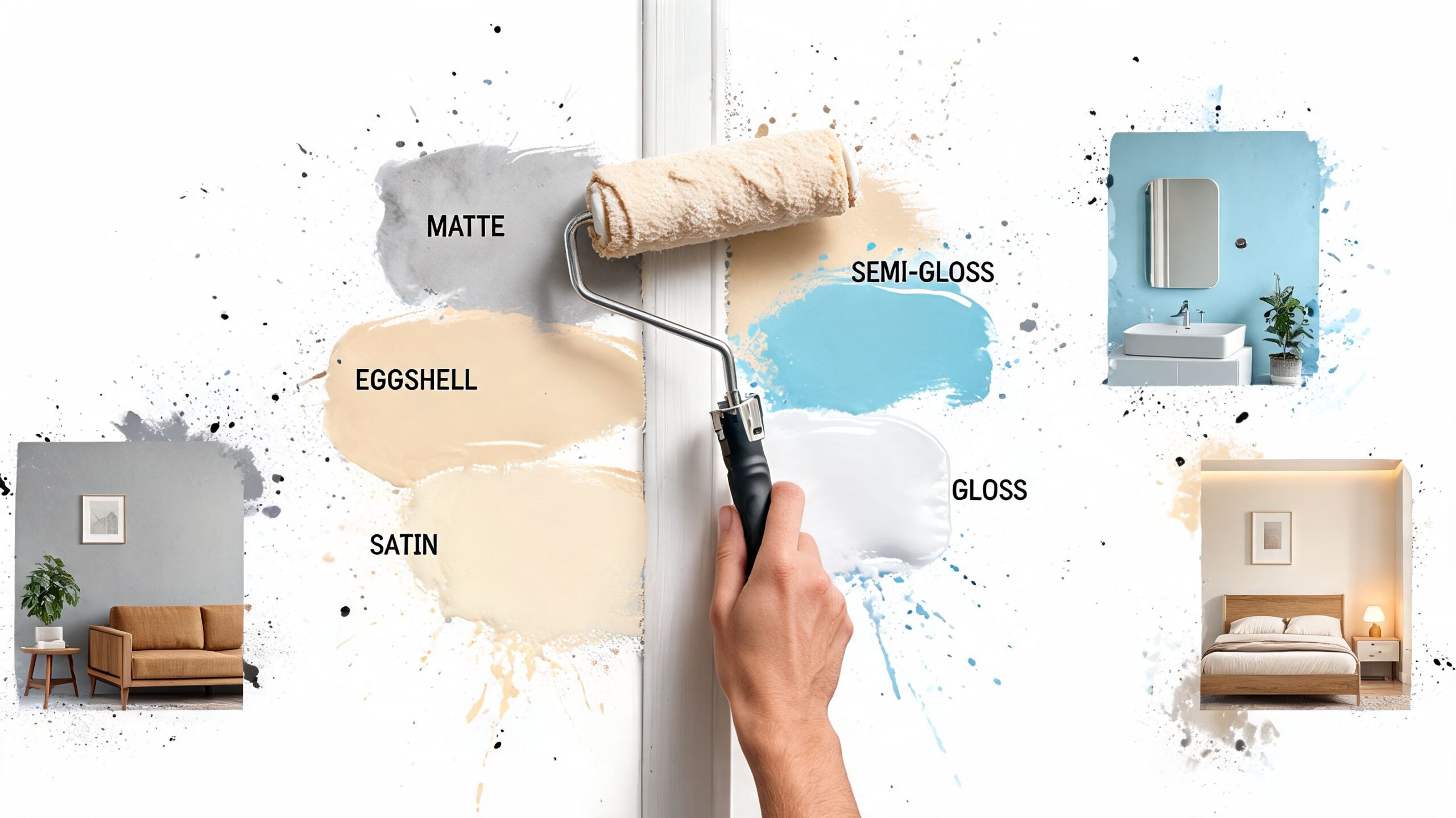
You see the difference straight away on site. A west-facing front room in Melbourne can look calm and even at 10 am, then every patch, join and roller mark shows up once the afternoon sun hits it. Finish choice changes that outcome more than many homeowners expect.
The practical way to choose sheen is to match it to three things. How the room is used, how good the surface really is, and what Melbourne light will do to it. In a newer build with straight plaster, you can push sheen a bit further. In an older Victorian or Edwardian home with movement, repairs and uneven walls, a flatter finish usually gives a better result.
Living areas and bedrooms
For living rooms, bedrooms and dining areas, broad wall appearance usually matters more than scrub resistance. These are the rooms where clients notice atmosphere first. If the walls look smooth and the colour sits evenly, the whole house feels better finished.
Older Melbourne homes often need restraint here. Lathe-and-plaster walls, old crack repairs, slight bellies in the surface and patched cornice lines all become more obvious as sheen rises. Matte or low sheen is usually the safer call on walls because it softens those imperfections instead of spotlighting them.
Light direction matters as well. In west-facing rooms, strong UV and late-day sun can make higher-sheen walls look harsher and less even. Lower reflectivity gives you a calmer finish and often better pre-sale presentation, especially if you're trying to make the home feel clean, bright and not overworked.
A practical guide for these spaces:
- Matte suits older walls, period homes and ceilings where hiding repairs matters most.
- Low sheen works well in better-condition living spaces that still need a softer look.
- Feature walls can sometimes take a touch more sheen, but only if the plastering is very clean.
Hallways kitchens and bathrooms
Traffic changes the recommendation quickly.
Hallways, entries and family zones get bumped, scuffed and wiped far more often than formal living areas. In rental properties, I usually avoid very flat finishes in these spots because every mark stays visible and frequent touch-ups can leave flashing. A satin or low-sheen washable system is often a better long-term choice, even if it shows a bit more of the wall underneath.
Kitchens, laundries and bathrooms need the same practical thinking. Steam, grease, condensation and routine cleaning put more stress on the coating, so the finish has to suit the room, not just match the lounge. On walls, that often means stepping up to a more washable sheen. On trim, it usually means a tougher enamel or water-based system with better moisture resistance.
For wet areas, specify by surface and exposure:
- General bathroom walls need a finish that handles repeated cleaning and intermittent moisture.
- Ceilings over showers or poorly ventilated rooms need a coating suited to condensation, not standard ceiling paint by default.
- Kitchen splashback zones and laundry work areas benefit from a harder, easier-cleaning finish than adjacent living spaces.
If you're weighing up products for a repaint, this guide on what type of paint you should use in your bathroom covers the paint-system side in more detail.
A quick visual explanation can help if you're still weighing the options:
Trim doors ceilings and cabinets
Trim should nearly always be treated as its own category. Skirting, architraves, doors and window frames cop more hands, knocks and cleaning than the walls beside them, so a tougher finish makes sense.
In most Melbourne homes, the cleanest result comes from keeping wall sheen controlled and letting the trim carry a little more polish.
Ceilings are usually best left flat or very low sheen. That reduces glare, helps hide plasterboard joins, and stops natural light from dragging attention upward. On doors, skirting and architraves, semi-gloss is a common sweet spot because it gives definition without every sanding mark reading across the room. Full gloss still has its place, but only where the preparation is first-rate and the sharper look suits the house.
Cabinets and joinery need even more care. Kitchens, wardrobes and built-ins are viewed at close range, touched every day and often sit beside flatter wall finishes. The wrong sheen can make them feel either dull and hard to clean or too shiny for the rest of the room. Getting that balance right is one of the details that helps a home feel properly considered, whether you're planning to stay, rent it out, or put it on the Melbourne market soon.
Choosing Finishes for Melbourne Exteriors
Exterior finish selection is a different conversation from interior work. The same sheen logic still applies, but outside you're also dealing with UV, rain, temperature shifts, dirt pickup, timber movement and the fact that sunlight shows everything.

Weatherboards render and mixed-age surfaces
Melbourne homes often combine old and new substrates on the same project. You might have repaired weatherboards, newer extension cladding, old fascia, patched render and replacement windows all on one facade. Finish choice affects whether those surfaces read as consistent or disjointed.
In high-sunlight Australian homes, glossier finishes can make flaws more obvious and can appear lighter or more mottled on rough surfaces, which is particularly relevant for homes with strong natural light or a mix of old and new materials, as outlined in Sherwin-Williams' gloss and sheen guidance.
For that reason, broad exterior wall areas often benefit from restraint. A lower-sheen finish can help weatherboards and render look more even, especially on west-facing elevations that get punished by afternoon sun.
Fences facades and sun-exposed elevations
Not every external element should be finished the same way. A front facade, fence and garage door all perform differently.
Here's the practical view:
- Weatherboards. Lower to mid-sheen often works well because timber movement and old repairs are less exaggerated.
- Render. Usually looks more natural in lower sheen, particularly where texture is part of the surface.
- Front doors and selected trim. Can carry a higher sheen if the substrate is well prepared and the design calls for a crisper detail.
- Fences. Need durability, but too much reflectivity can look harsh outdoors and draw attention to grain, filler and age.
For exterior painting and fence painting, the question isn't only “what colour?”. It's also how reflective you want the surface to be at midday and how forgiving it needs to stay over time.
Older homes prove this quickly. A gloss level that looks elegant on a smooth new build can look restless on a heritage facade with decades of movement and repairs underneath.
Beyond Standard Paint Specialty and Architectural Finishes
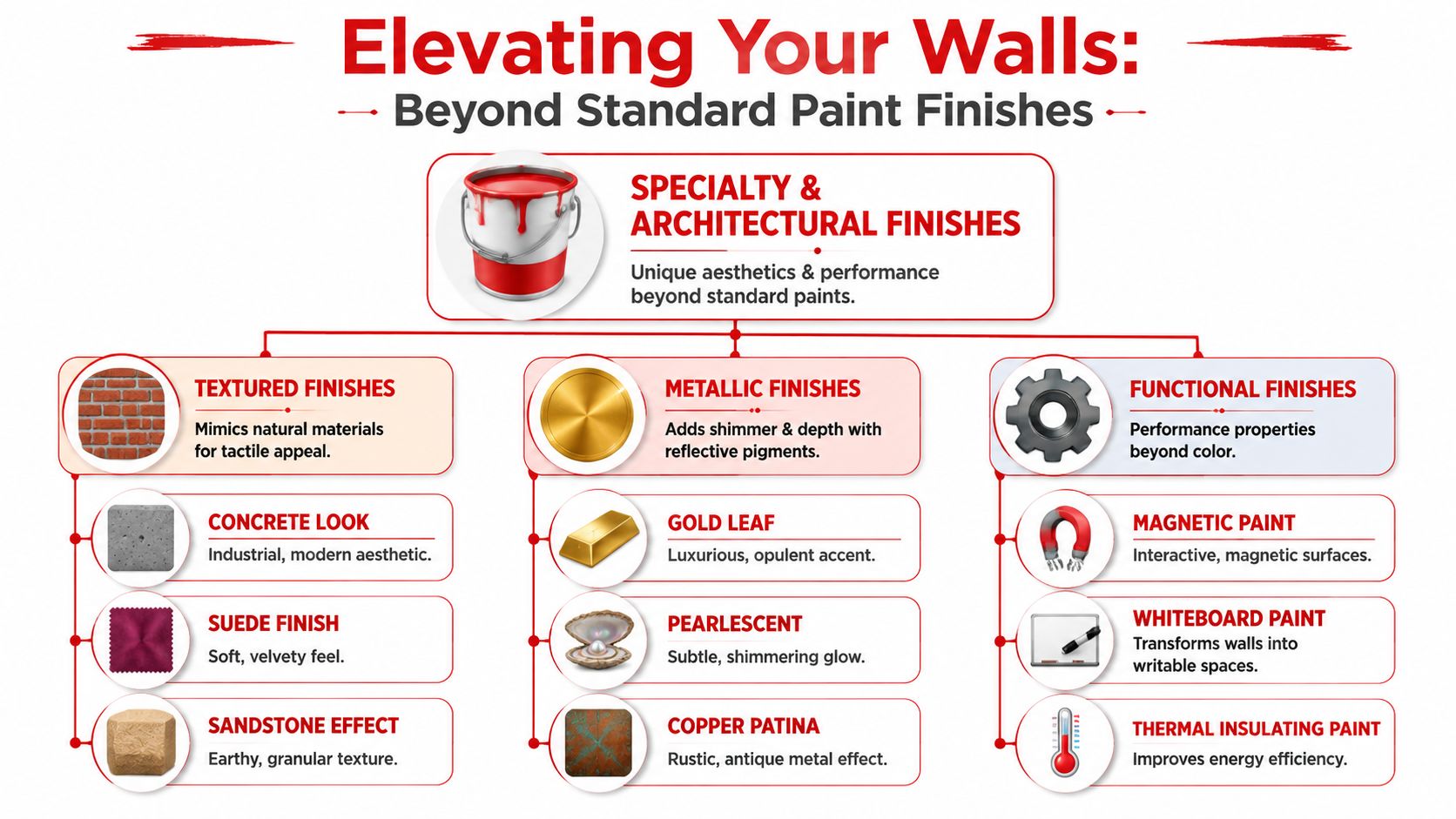
Standard wall paints cover most projects, but they're not the only option. Some jobs need more texture, more depth, or a coating that solves a specific problem rather than just changing colour.
Decorative wall finishes
Architectural finishes sit in a different category from standard acrylic wall paint. They're chosen for surface character as much as colour.
Some examples homeowners ask about include:
- Limewash. Popular in design-led interiors and some heritage-style spaces because it gives a soft, mineral look with movement across the wall.
- Venetian plaster. A more premium decorative surface that creates depth and a polished, hand-worked appearance.
- Textured feature finishes. Useful when a client wants a concrete-style, suede-like or more tactile wall treatment.
- Metallic or pearlescent effects. Better kept for controlled feature areas, because reflectivity can become too busy across full rooms.
These finishes reward planning. Substrate condition, lighting direction and application sequence matter far more than they do with a standard repaint.
Specialty finishes can look excellent in the right setting, but they're less forgiving of rushed preparation and inconsistent application.
If you're exploring built-in joinery, feature walls or kitchen updates, Newline Painting also publishes ideas around kitchen cabinet painting ideas that can help you decide whether a standard finish or a more architectural approach suits the job.
Functional coatings that solve practical problems
Some finishes are chosen for performance first.
A few common ones are:
| Finish type | Typical use | Why it's chosen |
|---|---|---|
| Epoxy floor coatings | Garages, workshops, some utility zones | Durable surface for concrete that's easier to maintain |
| Cabinet coatings | Kitchens, laundries, built-ins | Harder-wearing finish than wall paint for regular handling |
| Bathroom and bathtub coatings | Wet areas and resurfacing projects | Used where standard wall systems aren't suitable for the substrate |
| Whiteboard or magnetic coatings | Studies, offices, kids' zones | Adds practical function to the wall surface |
These aren't DIY afterthoughts. Product compatibility, curing conditions and correct primers matter. If you're considering epoxy floor painting or cabinet painting, the specification should be built around the substrate and use case, not just the final colour.
Why Preparation is Crucial for a Perfect Finish
Preparation decides whether a finish looks deliberate or disappointing. People often focus on the topcoat, but sheen only behaves as well as the surface underneath it.
A practical Australian rule of thumb is that lower-sheen paints are preferred where hiding defects matters most, while higher-sheen products are used in harder-wearing zones. That's also why preparation becomes essential as sheen rises, because patching, sanding and priming directly affect what you'll see in the finished film, as explained in this guide to paint finishes and surface performance.
On site, proper prep usually means:
- Cleaning first. Grease, dust and soap residue stop coatings from bonding properly.
- Patching and filling. Not just obvious holes, but dents, old fixings, settlement marks and previous paint failures.
- Sanding to level repairs. Especially important before satin, semi-gloss or gloss.
- Spot priming or full priming where needed. Bare plaster, timber repairs, stained areas and patched sections often need primer to avoid flashing and uneven absorption.
- Caulking gaps and refining edges. This is what helps trim look sharp rather than rough.
If you want a useful overview of where primers fit into the system, this paint primer guide explains the role clearly.
The simplest version is this: high sheen doesn't hide poor workmanship. It spotlights it.
Your Paint Finish Questions Answered
What's the safest paint finish for pre-sale painting in Melbourne
For most pre-sale work, broad wall areas do better in a lower-sheen finish that looks even under inspections and photography. It tends to suit a wider range of homes, especially older properties and apartments with strong natural light. Trim and doors can still step up in sheen so the home feels crisp.
Are matte finishes a bad idea in family homes or rentals
Not always, but they come with a trade-off. The move toward matte and low-lustre finishes in Melbourne renovations looks stylish, but those finishes can show application flaws more readily and are generally less durable than satin alternatives, which makes upkeep and retouching a bigger consideration in busy homes and investment properties, as discussed in Benjamin Moore's paint finish guide.
If the household is busy, a slightly more durable wall finish often makes day-to-day maintenance easier.
Can you paint over old gloss paint
Yes, but not by painting straight over it and hoping for the best. Old gloss usually needs cleaning, deglossing or sanding, and the right primer if adhesion is in doubt. This is one of the most common DIY shortcuts that causes peeling or poor bonding later.
What finish works best in older Victorian homes
Usually a lower-sheen finish on walls, because those homes often have aged plaster, previous repairs and uneven surfaces that stronger reflection will expose. Trim can still be stepped up if the timberwork is in good condition and prepared properly.
Should walls trim and cabinets all use the same finish
Usually no. They do different jobs. Walls need visual calm. Trim and cabinets need a tougher, easier-cleaning surface. Matching colour can work. Matching finish across every surface often doesn't.
How do I get a quote that actually specifies the finish
Ask for a written quote that lists preparation, substrate repairs, primer where required, and the proposed finish for each area such as walls, ceilings, doors, skirting, bathrooms, cabinets or exterior elements. That gives you something clear to compare before work starts.
If you're planning a repaint and want practical advice on the right finishes of paint for your home, Newline Painting can arrange a free on-site quote across Melbourne. A clear quote should outline the scope, preparation, paint system, sheen for each surface, and timing, so you can compare options properly before committing.