
You're probably looking at a wall that feels too flat for the room. Maybe it's a South Yarra apartment living area that needs more depth than low-sheen acrylic can give. Maybe it's a Victorian terrace in Albert Park or Hawthorn where plain paint looks a bit thin against original cornices, arches and timber detailing.
That's where Venetian plaster walls make sense. They sit in a different category to standard paint finishes. They're tactile, mineral-based, light-responsive and far less forgiving, which is exactly why they can look exceptional when the wall, product and installer all line up.
For Melbourne homeowners, the key questions aren't whether Venetian plaster looks good. It usually does. The practical questions are whether your walls are flat enough, whether the finish suits your house type, what maintenance you're signing up for, and whether the quote explains the prep properly.
Table of Contents
- What Is Venetian Plaster and Why Is It Popular in Melbourne
- Types of Venetian Plaster Finishes and Visual Effects
- The Pros and Cons for Melbourne Homes
- Venetian Plaster Costs and Project Timelines in Melbourne
- The Professional Application Process Explained
- Venetian Plaster vs Limewash Paint and Feature Walls
- Caring for Venetian Plaster Walls Maintenance and Repairs
- Frequently Asked Questions about Venetian Plaster
What Is Venetian Plaster and Why Is It Popular in Melbourne
Venetian plaster is a lime-based decorative plaster finish, not a textured paint. Its long lineage is one reason it still carries weight in premium interiors. The underlying lime-plaster tradition goes back to around 7000 BC, and the Venetian technique commonly associated with the finish developed in Venice about 400 years ago during the Renaissance, according to historical research on Venetian plaster origins.
That history matters in Melbourne because our housing stock spans two very different worlds. We work on heritage rooms with ceiling roses, deep skirtings and chimney breasts, and we work on modern apartments where owners want one strong material feature instead of a lot of visual clutter. Venetian plaster fits both when it's chosen carefully.
Why Melbourne owners keep asking for it
It gives walls movement. That's the simplest explanation.
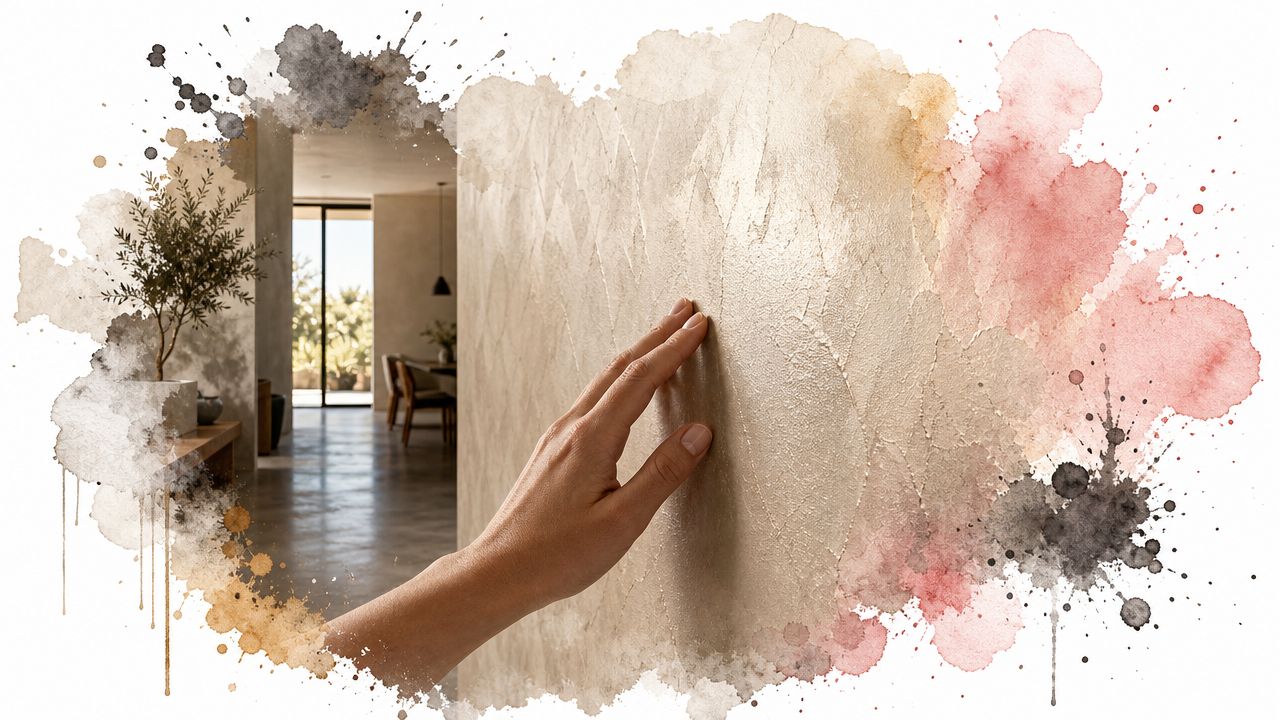
A painted feature wall can change colour and contrast, but it still reads as a coated surface. Venetian plaster catches light unevenly, softens reflections and creates depth through the body of the finish. In a Kew or Camberwell period home, that can make a formal sitting room feel more grounded. In a newer apartment in South Yarra or Richmond, it can stop a large blank wall from looking sterile.
A lot of current interiors are also moving toward natural materials and quieter surfaces. If you've been looking at artisanal tile design trends, you'll notice the same shift toward texture, mineral finishes and handcrafted variation.
Venetian plaster works best when you want the wall itself to be the finish, not just the background.
The decision points that matter
Before anyone commits to Venetian plaster walls, I'd narrow it to four practical questions:
- Wall condition: If the wall isn't flat, the finish will show it.
- Room use: Entry, living room and powder room walls are very different from kids' rooms and busy hallways.
- Visual target: Matte, softly textured, polished and marble-like all require different handling.
- Repair tolerance: If the wall gets damaged later, patching isn't as simple as touching up paint.
That's why Venetian plaster shouldn't be sold as a fashion finish. It's a specialist wall system with a strong design payoff, but it needs the right substrate, the right room and realistic expectations.
Types of Venetian Plaster Finishes and Visual Effects
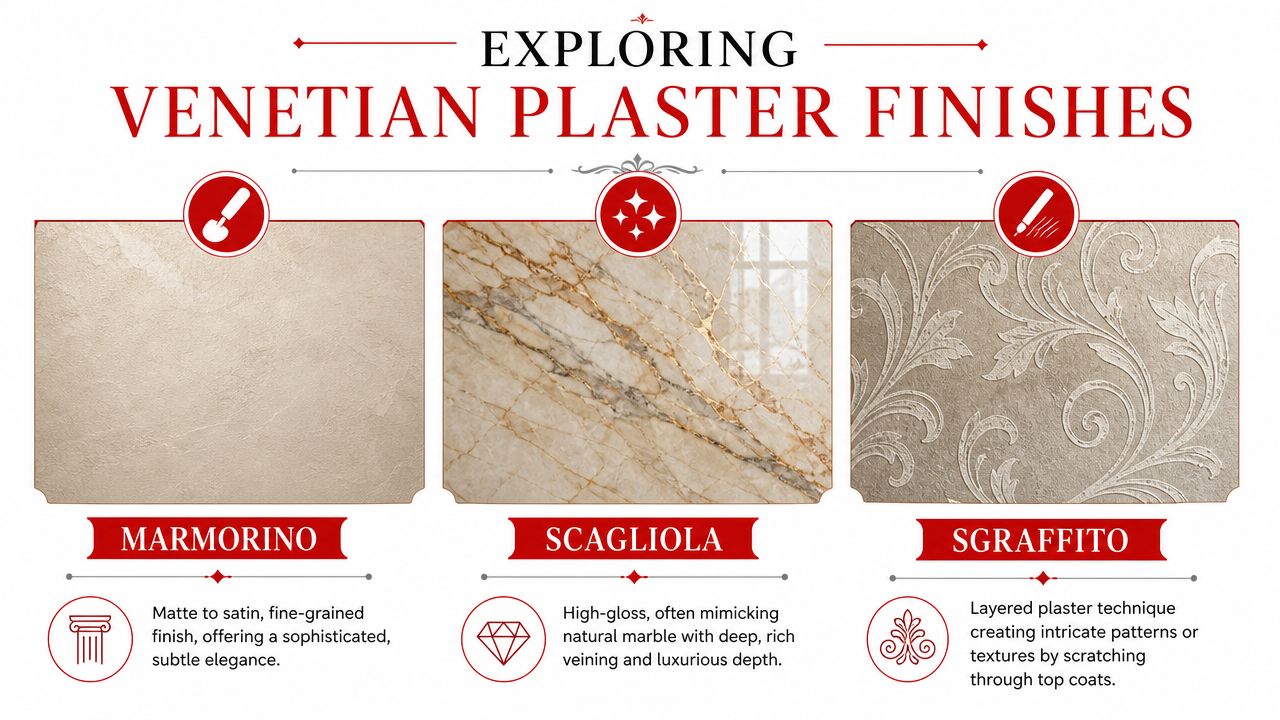
Venetian plaster isn't one look. It's a family of finishes that can read as soft stone, polished marble, cloudy mineral texture or deliberately layered decorative work.
The visual result comes from the mix and the way it's applied. One technical source notes that Venetian plaster can include up to 40% marble dust and is often applied in up to 6–7 layers before burnishing, which is what creates depth and sheen through compression rather than a simple topcoat shine, as described in this explanation of Venetian plaster composition and application.
Polished finishes
Polished Venetian plaster is the version that is often pictured first. It has a high sheen, visible movement and a compressed surface that can feel close to honed or polished stone.
This is the finish that works best on a controlled, well-lit feature wall. Think an entry wall in Toorak, a dining room fireplace breast in Malvern, or a restrained apartment lobby where the wall needs to do most of the visual work. It's less forgiving of poor prep because the reflectivity exposes hollows, repairs and waviness.
Matte and satin stone finishes
Matte and satin finishes usually sit more comfortably in Melbourne homes. They still have variation and depth, but they don't scream for attention.
These are often the better choice in living rooms, bedrooms and long hallways. They pair well with oak floors, off-whites, warm neutrals and older plaster details. In a Federation home, a softer stone-like finish usually feels more settled than a mirror-polished wall.
Decorative and layered effects
Some Venetian plaster finishes are more explicitly decorative. Scagliola-style work aims at a marble impression. Sgraffito uses layered coats and scratched-back patterning. More rustic variants can include pitting, clouding or stronger trowel movement.
These finishes can look excellent, but they need discipline. A decorative sample board can be beautiful and still be the wrong call for a full wall. Strong movement across a small powder room can be dramatic. Across a large open-plan wall, it can become visually busy fast.
A practical way to choose the look
When I'm talking a homeowner through options, I'd usually frame it like this:
- Choose polished if the wall is flat, lighting is controlled, and you want a formal focal point.
- Choose matte or satin if you want texture without too much reflectivity.
- Choose pronounced movement only if the room is simple enough to carry it.
- Choose subtle variation if you're matching period architecture or resale-friendly interiors.
Practical rule: The more sheen you want, the more important substrate quality becomes.
The Pros and Cons for Melbourne Homes
Venetian plaster can be the right finish for a Melbourne home. It can also be the wrong one if the wall condition, room use or budget don't match.
Here's the honest version.
Where Venetian plaster works well
The biggest advantage is visual depth. It gives you something standard paint can't. On a well-positioned feature wall, especially in homes with good natural light, it creates a surface that feels built rather than coated.
It also suits a wide range of Melbourne properties. In older terraces and Federation homes, it can sit comfortably beside original detailing because it has material character. In newer apartments, it adds warmth where plasterboard walls can otherwise feel flat and repetitive.
A few settings where it usually performs well:
- Formal living areas: It adds restraint and texture without needing bold colour.
- Entry walls: It can carry a narrow or tall wall that paint alone won't lift.
- Fireplace surrounds: It works well where owners want a mineral, architectural finish.
- Powder rooms: Small spaces can handle richer surface interest.
Where it can disappoint
The first drawback is cost. Venetian plaster is labour-heavy, and a proper job includes substrate preparation, not just the decorative coats.
The second is repairability. If someone drags furniture across it, chips it near a corner, or gouges it with a bag zip or bike handle, the repair can be visible unless it's blended very carefully. That's different from premium wall paint, where a small patch and repaint is often straightforward.
There's also a lifestyle fit issue. If you've got young children, narrow hallways, pets, frequent furniture movement or a rental-style wear pattern, some Venetian plaster walls will age better than others. A subtle, lower-sheen feature wall in a living zone is one thing. A high-contact corridor is another.
| Consideration | Better fit for Venetian plaster | Better fit for paint or another finish |
|---|---|---|
| Wall quality | Very flat, well-prepared walls | Uneven walls needing broad concealment |
| Room use | Feature areas, lower-impact spaces | High-contact utility zones |
| Design goal | Texture, depth, natural variation | Clean, consistent colour |
| Future repairs | Owner accepts specialist touch-ups | Owner wants simple maintenance |
The Melbourne-specific trade-off
Many Melbourne homes have patched plaster, movement cracks, old paint build-up or walls that look straight until raking light hits them. That's where people get caught out.
Venetian plaster doesn't hide those issues well. If you're in an older home in Albert Park, Northcote or Kew, the success of the finish usually comes down to how much prep is done before the decorative work starts. Skip that, and the final wall can look expensive but still imperfect.
Venetian Plaster Costs and Project Timelines in Melbourne
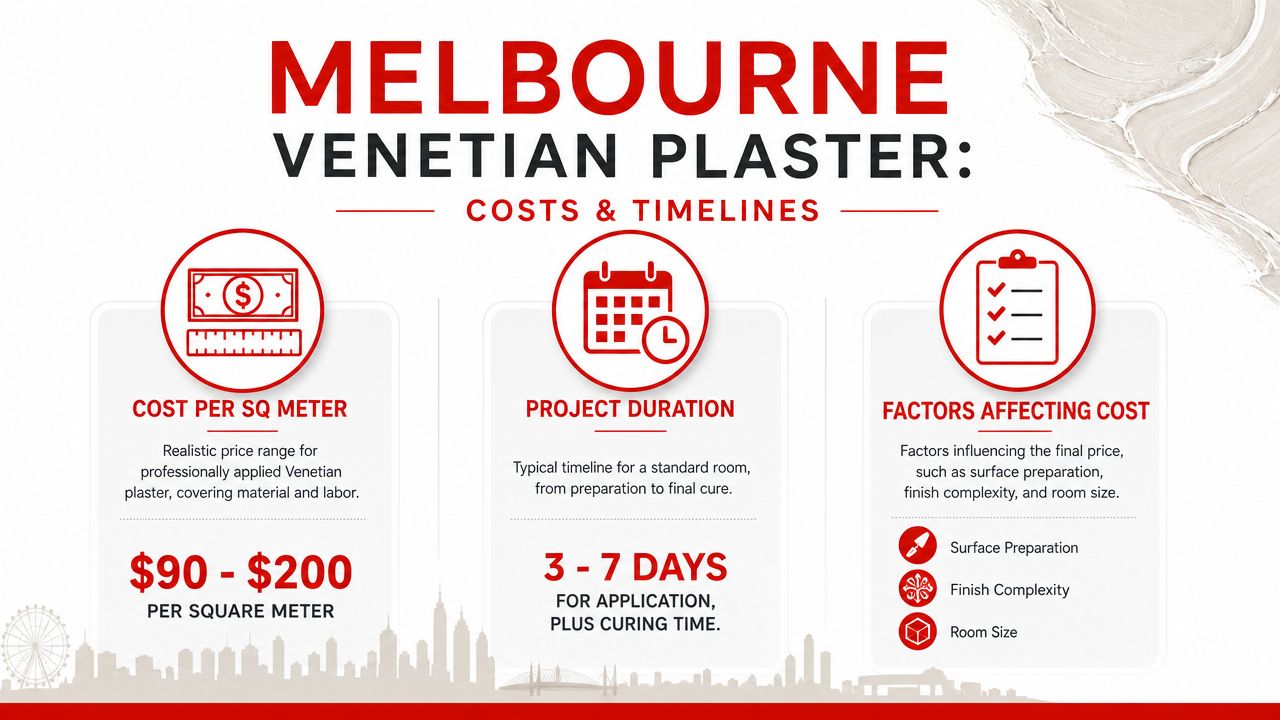
Venetian plaster is priced more like a specialist decorative surface than a standard repaint. A typical range you'll often see for professional application is $90 to $200 per square metre, and a typical project duration is often described as 3 to 7 days for application, plus curing time in the supplied project brief. That range reflects labour, prep, finish complexity and site conditions rather than just material volume.
What actually drives the cost
The biggest variable is prep. A near-new apartment wall with minimal defects is one thing. An older Hawthorn terrace with patched cracking, uneven previous repairs and visible paint build-up is another.
Cost usually moves on these factors:
- Surface correction: Skimming, levelling, sanding and stabilising the wall takes time.
- Finish selection: A softer matte effect is different from a highly polished, reflective finish.
- Wall size and layout: A simple feature wall is usually more efficient than broken-up walls with returns, niches and tight corners.
- Access and protection: Occupied homes, furnished rooms and stair access all add labour.
- Sealing requirements: Kitchens, bathrooms and high-touch spaces may need a different protection strategy.
A cheap Venetian plaster quote is often cheap because something important has been removed. Usually that's prep time, sample work, protection or the number of finishing passes.
Why the timeline stretches out
People often expect it to run like a normal paint job. It doesn't.
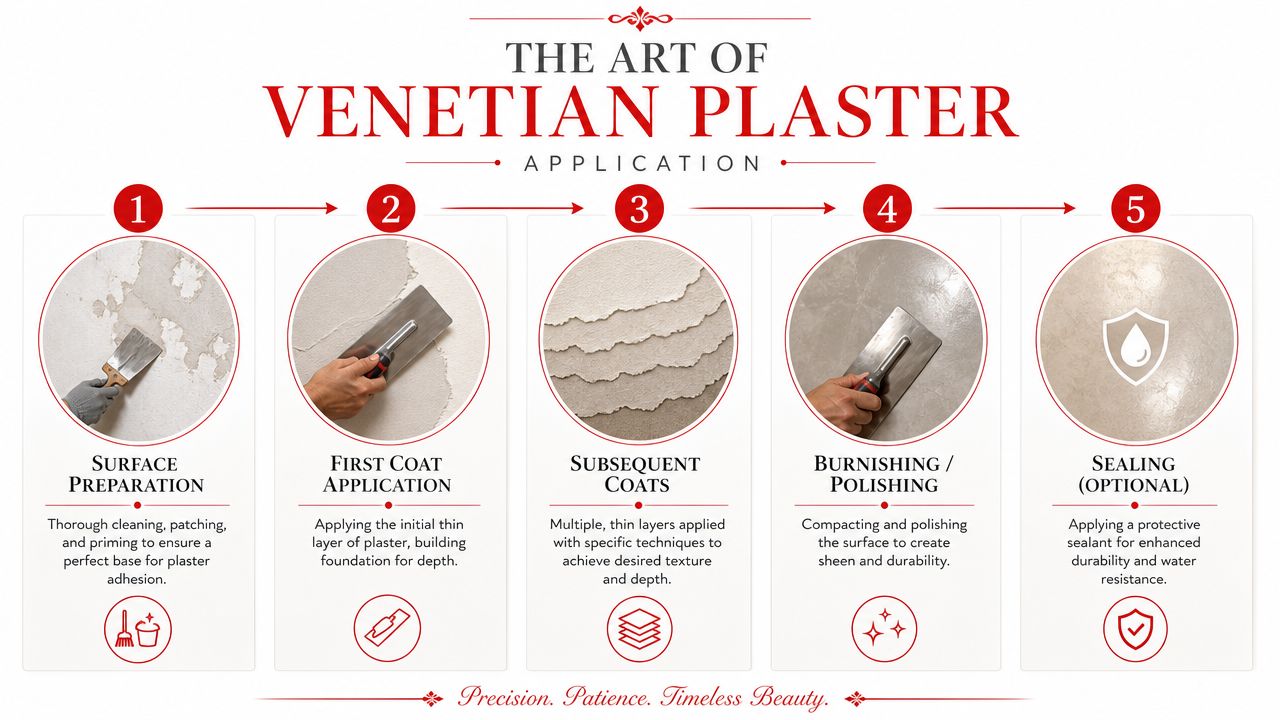
Venetian plaster is built in stages. There's inspection, wall correction, priming if required, thin coat application, intervals between coats, burnishing and then sealing where the system calls for it. Even a single feature wall can take several site visits or several days depending on the system and room conditions.
If a contractor suggests they can do complex Venetian plaster walls in one quick hit, ask what they're leaving out.
What a proper quote should show
A useful quote should separate the decorative finish from the substrate work. If everything is rolled into one vague line item, it's hard to compare offers properly.
At minimum, ask whether the quote covers:
- Protection of floors, furniture and joinery
- Wall repair and levelling
- Primer or mineral-compatible base preparation
- Number of plaster coats
- Burnishing and sealing
- Touch-up process and aftercare advice
For homeowners trying to compare overall decorating budgets, a tool like this painting cost calculator for Australia can help frame the difference between standard painting rates and specialist finishes, even though Venetian plaster still needs its own site-specific quote.
The Professional Application Process Explained
A good Venetian plaster finish is built before the plaster goes on. Most problems come from poor substrate assessment, rushed coat timing or overworking the surface.
Australian technical data for Rockcote's Venetian plaster describes it as a traditional lime plaster system for a high-gloss interior finish built from multiple thin, polished layers. That same technical baseline matters because it confirms the result depends on controlled application and substrate flatness, not on heavy coats that hide defects, as outlined in Rockcote's Venetian Plaster technical data sheet.
Step 1 starts with the wall, not the finish sample
Before any trowel work, the wall needs to be checked in natural and artificial light. I'd look for patching ridges, old roller texture, movement cracks, proud joints, sanding scratches and soft areas around previous repairs.
If the base is wrong, the decorative finish just magnifies it. This is the same principle behind solid repaint prep, and a general step-by-step guide to preparing walls for painting gives a useful baseline for understanding why the substrate matters before any premium finish goes on.
Step 2 is controlled build-up
Venetian plaster is applied in thin passes with a steel trowel or similar specialist tool. Pressure, angle and material loading all matter.
The installer isn't trying to bury the wall in product. They're building surface character gradually. Depending on the finish, each coat may tighten the grain, create movement, close the face or prepare the wall for the final polished pass.
A common mistake with inexperienced application is going too heavy. That can leave excessive trowel chatter, inconsistent drying, drag marks or a muddy visual pattern.
Step 3 is burnishing
Burnishing is where a lot of the look is made. The plaster is compressed as it firms, which is what creates sheen and depth in polished finishes.
This part needs timing. Too early and the material smears. Too late and it won't compress properly. Too much pressure in the wrong spot can leave dark marks, lines or hot patches that stand out across the wall.
Here's a visual reference of the craft involved in a polished application:
A clean Venetian plaster wall should look intentional up close and calm from across the room. If it only looks good from one distance, the application usually wasn't resolved properly.
Step 4 is protection and sign-off
Some finishes are left more natural. Others are sealed or waxed depending on the room and expected wear. That choice changes both appearance and practicality.
This is also where process matters. On our side of the trade, a written quote, surface-prep scope, sample confirmation and final walkthrough are what keep expectations aligned. If a contractor offers a specialist finish without a clear handover standard, the risk sits with the owner.
Venetian Plaster vs Limewash Paint and Feature Walls
Venetian plaster, limewash and premium paint all solve different problems. None of them is automatically the right answer.
If you want the shortest version, Venetian plaster gives the most depth, limewash gives the softest mineral wash, and premium paint gives the cleanest and most economical finish.
The substrate question changes everything
One of the most overlooked realities is that Venetian plaster highlights defects rather than concealing them. A practical guide to application warns that most walls are not completely smooth, and because the finish is built in thin burnished layers, flatness matters more than people expect, as noted in this wall-prep discussion for Venetian plaster application.
That's the key difference from standard painting. If a wall in a St Kilda apartment has a few minor repairs and some surface waviness, a premium acrylic low-sheen can still look very good after filling and sanding. Venetian plaster is less forgiving.
Finish comparison
| Attribute | Venetian Plaster | Limewash | Premium Paint |
|---|---|---|---|
| Visual effect | Strong depth, movement, stone-like body | Soft cloudiness, chalky mineral look | Even colour, controlled sheen |
| Surface feel | Tactile and layered | Flat to lightly textured | Smooth film finish |
| Wall prep sensitivity | Very high | Moderate to high | Moderate |
| Repair simplicity | Difficult to blend seamlessly | Moderate, depends on finish | Usually easiest |
| Best use | Feature walls, statement interiors | Soft heritage and relaxed modern interiors | Full-house repaints, practical feature walls |
| Cost position | Highest | Mid-range to premium | Most economical |
When I'd recommend each one
Choose Venetian plaster if the wall is prominent, the architecture can carry a handcrafted finish, and you're comfortable paying for substrate prep and specialist application.
Choose limewash if you want movement without the same degree of polish or hardness. It suits period homes especially well, and if you're weighing that option, this overview of limewash painting services is relevant because limewash sits much closer to a soft atmospheric finish than a stone-like plaster.
Choose premium paint if practicality is leading the decision. A well-specified acrylic low-sheen from Dulux or Haymes on a properly prepared wall still looks sharp, especially in bedrooms, hallways and investment properties where straightforward maintenance matters.
For homeowners comparing broader material choices, this piece on Adelaide homeowners' wall material choices is useful because it frames wall finishes as a practical selection issue, not just a style decision.
A simple decision filter
- Pick Venetian plaster for one or two important walls.
- Pick limewash when softness matters more than shine.
- Pick premium paint when consistency, speed and easy touch-ups matter most.
Caring for Venetian Plaster Walls Maintenance and Repairs
Venetian plaster walls need gentle maintenance, not aggressive cleaning. The protective layer is a big part of the long-term performance. Practical guidance notes that the finish is typically sealed with a clear water-based coating or wax, and that sealer choice affects moisture resistance and cleanability, particularly in kitchens and higher-traffic interiors, as discussed in this maintenance overview of Venetian plaster finishes.
Day-to-day care
For routine cleaning, keep it simple:
- Dust first: Use a soft microfibre cloth or dry duster.
- Test before wiping: If you need to remove a mark, try the least aggressive method in a hidden spot.
- Use mild cleaning only: A soft damp cloth is safer than soaking the surface.
- Avoid abrasion: No scourers, stiff brushes or harsh spray-and-wipe products.
A general guide to textured wall cleaning methods is worth reading because the same principle applies here. Friction and harsh chemicals can dull or mark the finish.
What you can and can't fix yourself
Light surface dust and some minor marks are manageable. Deep scratches, edge chips, dents and polished hot spots usually aren't.
The reason is simple. Venetian plaster has variation in pressure, sheen and movement. You're not just matching colour. You're matching the handwork. A repair can require local filling, reapplication of plaster, re-burnishing and careful blending into the surrounding area.
Small damage on Venetian plaster often looks bigger after a bad repair attempt.
If your wall is in a kitchen, bathroom or tight hallway, it's worth keeping a record of the original finish and sealer used. That gives you a much better chance of a controlled repair later.
Frequently Asked Questions about Venetian Plaster
Is Venetian plaster suitable for bathrooms
Yes, it can be, but the exact finish and sealer matter. Bathrooms, powder rooms and vanity walls aren't all equal. General humidity is one thing. Direct and repeated water exposure is another.
For Melbourne bathrooms, I'd assess where the finish is going before approving it. A feature wall outside the shower zone is a different specification to a wall getting frequent splash-back.
Can Venetian plaster go over existing painted walls
Sometimes, yes, but only if the substrate is sound and prepared correctly. Existing paint, patching compounds, gloss residues and uneven repairs can all interfere with adhesion and final appearance.
That's why site inspection matters. If the existing wall is unstable or too uneven, the right answer may be more prep, a skim system, or choosing a different finish altogether.
Does it suit heritage homes or just modern apartments
Both, if the finish is chosen well. In a Federation or Victorian home, softer mineral finishes often sit better than highly reflective ones. In contemporary apartments, polished or satin finishes can work beautifully on a clean feature wall with simple lighting.
The architecture should lead the finish choice. Not the other way around.
Is Venetian plaster hard to maintain
It's not high-maintenance in the daily sense, but it does require more care than painted plasterboard. You need to clean it gently, avoid impact damage and treat repairs as specialist work.
If easy touch-ups are your top priority, premium paint usually wins.
If you want a site-specific opinion on whether Venetian plaster walls suit your home, arrange a free on-site quote with Newline Painting or call 1300 044 206. A proper assessment should cover wall condition, finish options, prep scope, protection system and a written price before any work starts.