You look at the back fence on a sunny afternoon and the problems jump out fast. Faded panels, surface rust, peeling old coating, and one side that cops more weather than the rest. That is usually when homeowners start asking what fence painting costs in Melbourne, and why one quote can be much higher than another.
For a standard 150-foot fence, most Melbourne jobs sit somewhere in the low-to-mid overall range, with Colorbond often falling at the lower end when the surface is sound, access is easy, and the scope is straightforward. The mistake I see is treating that as a flat rate. It is not. A tired timber fence with flaking paint, loose palings, or years of grime can cost far more than a clean metal fence of the same length because the labour is in the preparation, not just the spraying or brushing.
Melbourne weather is hard on exterior coatings. Strong UV, damp stretches, and quick temperature changes expose shortcuts fast. A fence that is properly cleaned, sanded, spot-primed, and finished with two full coats will usually cost more up front, but that is often the cheaper job over time because it lasts longer and looks even across the whole run.
That is the part many online calculators miss. They give a simple price-per-foot figure and skip over the actual variables that change the quote in Melbourne, especially fence condition, access, masking, neighbouring property issues, and whether the painter is allowing for a full two-coat system or just a quick refresh.
If you want a useful point of comparison for metal finishes, the FenceScape guide to finishing metal fencing is a solid reference. For cost planning, the main thing to know is simple. Good prep is where money is well spent, and a clear quote should spell out exactly what prep, primer, and number of coats are included so you do not get hit with extras later.
Table of Contents
- Your Guide to Fence Painting Costs in Melbourne
- What's Included in a Fence Painting Quote
- How Fence Type and Condition Impact Your Price
- DIY vs Hiring Professional Melbourne Painters
- Smart Ways to Manage Your Fence Painting Budget
- A Homeowner's Checklist for Accurate Quotes
- Timelines, Warranty, and Peace of Mind
Your Guide to Fence Painting Costs in Melbourne
You get three fence quotes for what looks like the same job, and one is hundreds cheaper. In practice, that usually means the scope is different, not that one painter has found a secret way to do the work properly for less.

The earlier price range gives you a rough budget. The more useful question is why one Melbourne fence lands at the lower end and another climbs fast. The biggest drivers are surface condition, fence material, access, and whether the quote covers a full exterior system with proper preparation and two coats, or a quicker repaint that looks fine at handover but does not hold up.
Melbourne weather is hard on fences. Timber cops sun, rain, and movement through the seasons. Metal fences often show oxidation, chalking, or old coating failure, especially on exposed boundaries. Those problems add labour before a brush or spray gun does any productive painting, and that labour is what many online calculators miss.
A two-coat system also changes the cost more than homeowners expect. One coat over a tired surface can freshen colour for a while, but it does not give the same coverage, durability, or finish consistency. If a quote sounds cheap, check whether it includes washing, sanding, spot priming, masking, and two full finish coats across the fence you see from the house and street.
For metal fencing, coating choice matters as much as colour. The FenceScape guide to finishing metal fencing gives a useful general reference on how different finishes behave, but local conditions and the existing surface still decide how much prep a painter needs to allow for.
The practical takeaway is simple. Compare scope before price. A clear quote should tell you what gets cleaned, repaired, primed, and coated, so you know whether you are paying for a finish that lasts or just a cheaper start point.
What's Included in a Fence Painting Quote
You get a quote for a fence and the total looks reasonable. Then the job starts, and suddenly rust treatment, extra prep, second-side painting, and plant removal are treated as variations. That usually means the original quote priced the easy version of the job, not the fence you have.
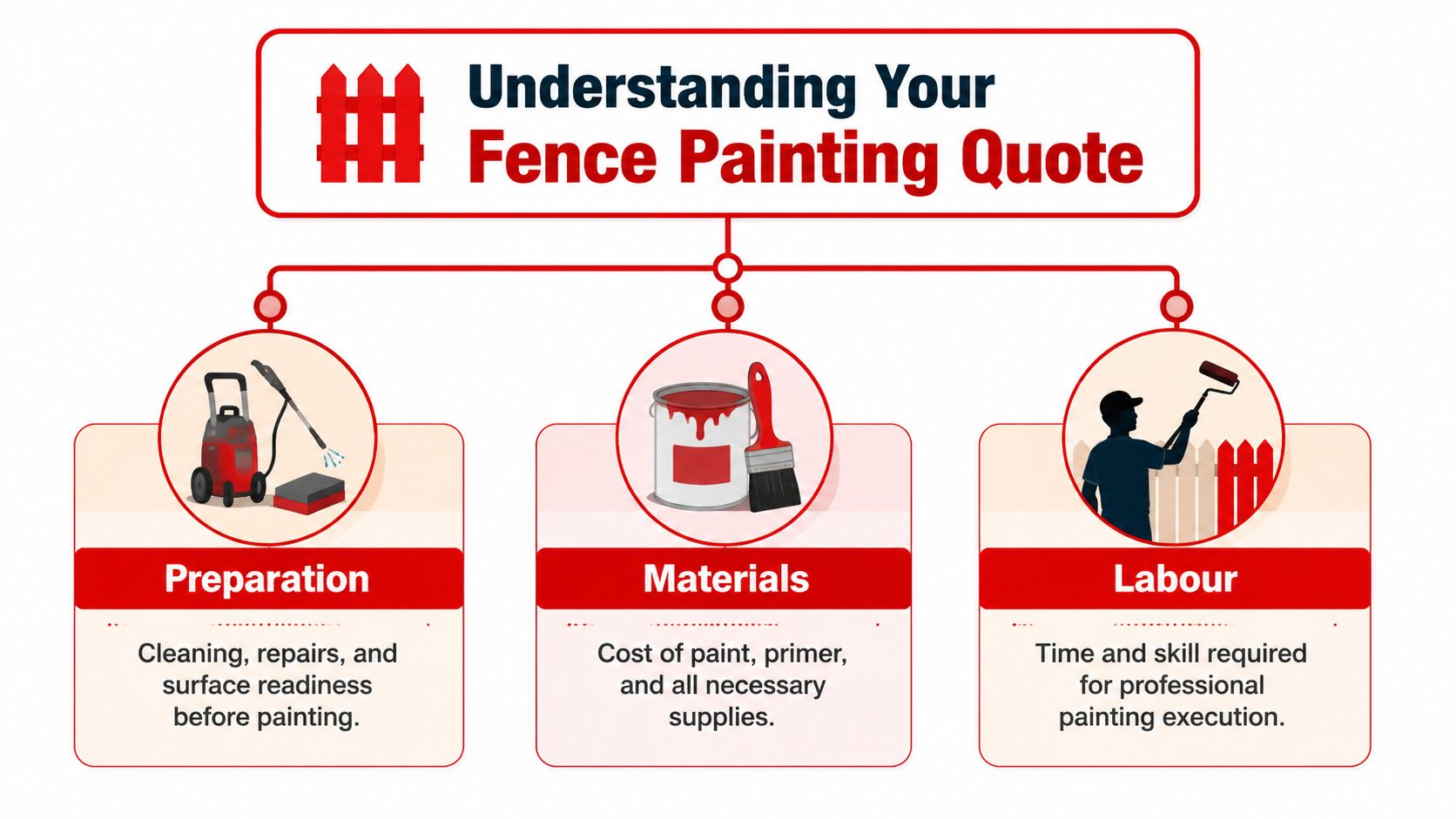
A proper Melbourne fence painting quote should spell out scope, not just price. The cost usually sits across three areas: preparation, materials, and labour. Preparation is where quotes often drift apart, because one painter may allow for a wash and two coats, while another allows for mould treatment, sanding, spot priming, masking, and full cleanup. Those are not small differences. They change both durability and labour time.
Preparation is where the real value sits
Fence painting failures usually start before the paint goes on. Dirt, chalking, oxidised metal, flaking old paint, tannin bleed from timber, and mildew all need attention first. If they are left in place, the new coating can fail early, even if the finish looks good on day one.
A quote may include:
- Washing and surface cleaning to remove grime, cobwebs, chalky residue, and loose contamination
- Sanding or mechanical abrasion on glossy, weathered, or oxidised surfaces so primer and paint can bond
- Scraping and spot repairs where old coating is loose or timber has minor surface damage
- Priming bare timber, metal, or patched areas so the finish coat has a stable base
- Masking and site protection around paving, plants, walls, gates, and neighbouring property
- Mould or rust treatment where the fence has been holding moisture
This is also where material-specific prep matters. Aluminium and galvanised surfaces need the right system, not just any exterior paint. If your quote is for a metal fence, it helps to understand the prep steps involved in painting aluminium fencing properly and the standard tips for painting zinc-coated steel before you compare prices.
Materials and labour need to be described clearly
Materials are not just paint tins. A complete fence system can include cleaners, mould wash, fillers, primers, rust-inhibiting products, caulking in selected areas, abrasives, masking products, and two finish coats. Better products often cost more upfront, but they usually cover better and hold up longer on exposed boundaries.
Labour depends on the shape of the fence and how hard it is to work on. A long, clear run is straightforward. A fence with shrubs growing through it, tight side access, uneven ground, awkward neighbours' structures, or a lot of posts and capping takes longer and should be priced that way.
One line in the quote matters more than homeowners expect. The number of coats. If it does not say primer where needed and two finish coats, ask. If it does not say whether both sides are included, ask that too. Many online fence calculators miss those details, which is why Melbourne quotes can vary so widely for fences that look similar on paper.
What to check before you accept the price
Read the inclusions line by line. A clear quote should tell you:
- what preparation is allowed for
- whether minor repairs are included or excluded
- the product system being used
- how many coats are included
- whether both sides of the fence are being painted
- what access assumptions the painter has made
- whether cleanup and waste removal are part of the price
That is how you avoid a cheap quote that turns expensive halfway through the job. A good fence quote should leave very little to guesswork.
How Fence Type and Condition Impact Your Price
A fence can look simple from the driveway and still be expensive to paint well. The difference is usually in the substrate and the condition of the surface, not the length alone. That is why Melbourne fence quotes often vary more than online calculators suggest. Those calculators rarely account for weathered timber, chalky metal, mildew after a wet winter, or the prep needed before a proper two-coat system can go on.

Colorbond fencing needs more than a wash and two coats
Colorbond and other pre-finished steel fences often get priced too cheaply by people who assume metal is quick. Sometimes it is. Sometimes it is the job that causes trouble.
The key question is adhesion. Newer panels can still carry surface residue from manufacture or installation. Older panels may be faded, chalky, or starting to show corrosion around scratches, fixings, and cut edges. A painter who handles this properly will allow time for cleaning, abrasion where needed, spot treatment to problem areas, and the right primer system before the finish coats go on.
That prep is where the cost sits. Skip it, and the paint can fail far earlier than the owner expected.
For a broader practical read on coating zinc-based metal surfaces, these tips for painting zinc-coated steel line up well with what painters see on site. If your fence includes aluminium sections or trims, this guide on how to paint aluminium is also useful.
Timber fences spread out the price range
Timber gives the widest spread in quotes because condition changes the job completely. A newer paling fence with dry, sound boards is straightforward to coat. An older boundary fence with lichen, loose palings, nail bleed, splintering rails, and flaking old paint can take serious preparation before it is worth painting at all.
In Melbourne, I would rather spend the budget on timber prep than on a premium topcoat over a bad surface. That is where the job either lasts or starts peeling early.
Common timber issues that push the price up include:
- old paint that needs scraping and feather sanding
- mould or algae that needs treatment and drying time
- rough, porous boards that absorb more product
- cracked or loose palings that need minor repairs before coating
- heavy greying and weathering from sun exposure
- fences built hard against garden beds, sheds, or retaining walls
Each one slows production. Several of them together can change a fence from a simple repaint into a prep-heavy restoration job.
Condition matters more than homeowners expect
Two fences can be the same length and still land in very different price brackets. One might only need cleaning and a sound repaint. The other might need stain blocking, rust treatment, sanding, filling, and hand work around damaged sections.
Shared boundary fences add another layer. If one side has clear access and the other is packed with plants, bins, air-conditioning units, or a neighbour's pergola, labour goes up because the painter cannot move efficiently. That does not always show in a square-metre or per-metre estimate, but it shows up in the actual quote.
A failing fence also needs an honest call. Paint improves appearance. It does not fix rotten rails, unstable posts, or warped sections that keep moving.
That is the trade-off behind price. A lower quote can be fine on a clean, sound fence. On a tired fence, a higher quote often reflects the preparation needed for a finish that holds up through Melbourne weather instead of looking tired again after the next couple of seasons.
DIY vs Hiring Professional Melbourne Painters
DIY fence painting can work. It makes sense for some owners, especially if the fence is small, accessible, and already in decent condition. However, it is common to underestimate the setup, the prep time, and how hard it is to keep a large exterior job moving neatly over multiple days.
The real DIY question is time and risk
The paint itself isn't the main challenge. The challenge is doing all the unexciting work properly before the first coat goes on, then keeping the finish consistent across the full run.
DIY jobs often become frustrating when the fence needs more sanding than expected, more primer than expected, or more cutting-in than expected around posts, lattice, retaining walls, and garden beds. If you buy tools for one project, overspend on product, or need to redo sections because adhesion fails, the savings can shrink quickly.
Professional painters bring three things most DIY jobs don't. A faster workflow, a cleaner coating system, and experience spotting problems before they become callbacks.
DIY vs Professional Fence Painting
| Factor | DIY Project | Professional (e.g., Newline Painting) |
|---|---|---|
| Upfront spend | Usually lower at the start if you already have tools | Higher upfront because labour, prep, and materials are included |
| Preparation quality | Depends on your time, skill, and patience | Usually more systematic, especially on weathered timber or metal |
| Finish consistency | Can vary across long fence runs | More even coverage and cleaner edge work |
| Tools required | You may need sanders, brushes, rollers, masking gear, ladders, and wash equipment | Tools and site setup are already part of the service |
| Time commitment | Often spreads across weekends and weather delays | Usually scheduled and completed more efficiently |
| Risk of early failure | Higher if prep or product choice is wrong | Lower when the system matches the substrate |
| Warranty | You carry the risk | A professional job can include workmanship cover |
There's also the issue of local help. If you're weighing up the cost against convenience, it helps to compare with actual Melbourne painters near you rather than generic national guides.
Hiring a painter isn't just buying labour. You're buying fewer mistakes on surfaces that are exposed to weather every day.
If the fence is new, simple, and you enjoy this kind of work, DIY can be reasonable. If it's old, metal, patchy, or visible from the street, paying for proper prep is usually the better financial decision.
Smart Ways to Manage Your Fence Painting Budget
Controlling fence painting cost isn't about stripping the quote down to the cheapest number. It's about spending where the finish lasts and avoiding money that gets burned on premature repainting.
Where to save and where not to
Don't cut preparation first. That's the part that protects the rest of the spend. Skipping cleaning, sanding, or priming may reduce the invoice today, but it usually increases the chance of early failure later.
The better places to manage budget are the parts of the job that reduce labour friction or simplify the scope.
- Be clear about one side or both sides. This is one of the biggest quote variables.
- Decide on repairs early. If some sections need replacing, sort that before the painter starts.
- Choose a durable system once. Repainting too soon is usually the most expensive option overall.
- Bundle exterior work where it makes sense. If other outside painting is already being planned, it can be worth comparing combined access and setup costs with broader house painting cost guidance in Australia.
Simple ways to reduce labour time
You don't need to do the technical prep yourself to help reduce the job cost. You can make the site easier to work in.
Helpful pre-job steps include:
- Trim back vegetation so the fence is fully visible and reachable.
- Move outdoor items like bins, pots, timber stacks, and furniture away from the line.
- Confirm neighbour access early if the outside face sits on a shared boundary.
- Point out problem areas at quoting stage so rust, peeling, or damaged boards are included from the start.
A practical budget mindset is this. Spend on adhesion, coverage, and durability. Save on avoidable labour delays. That's usually where the best value sits.
A Homeowner's Checklist for Accurate Quotes
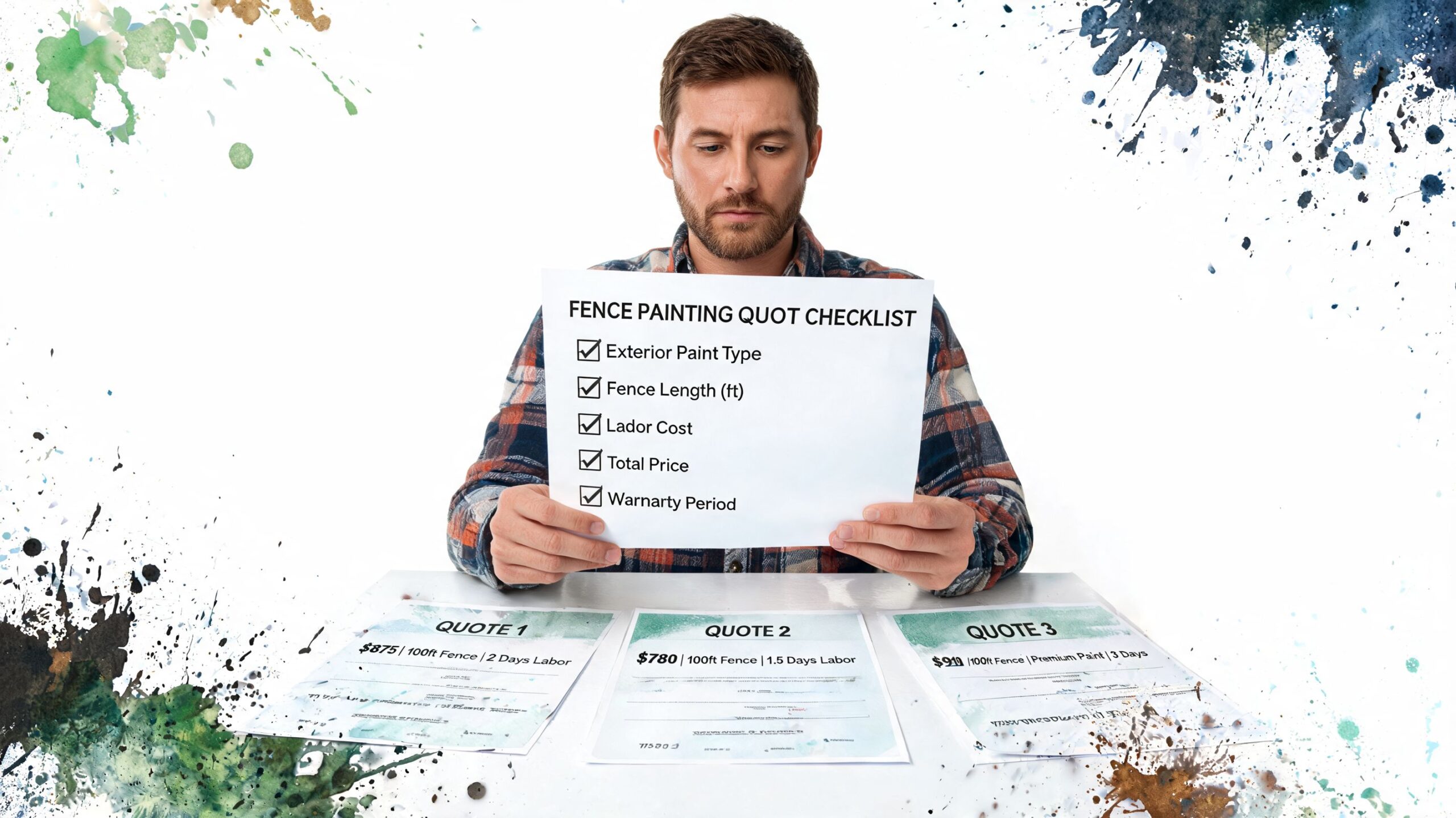
A Melbourne homeowner gets three fence painting quotes for what looks like the same job. One is much cheaper. Then the questions start. Is that price for one side or both, are the gates included, and does it allow for the prep an older fence usually needs after years of sun and wet weather?
That is where cheap quotes turn expensive.
Questions that stop surprise extras
A proper fence painting quote should spell out the system, the preparation, and the exact parts of the fence being painted. Generic online estimates often miss the actual cost drivers in Melbourne, especially weathered timber, failed old coatings, and the labour involved in getting a fence ready for a two-coat finish that will last.
Ask these before accepting any estimate:
- What preparation is included before painting starts?
- Is washing or mould treatment included, or is that charged separately?
- What primer is included, if any, and on which areas will it be used?
- How many coats are included in the quoted system?
- Is the quote for one side or both sides of the fence?
- Are gates, posts, capping, rails, and returns included?
- Does the quote allow for cutting in around plants, sheds, or tight access points?
- What happens if loose paint, rot, rust, or damaged palings are found once work starts?
- Is cleanup and rubbish removal included at the end?
The key point is simple. If one painter is pricing wash, scrape, spot-prime, and two full coats, and another is pricing a quick repaint over whatever is there, those quotes are not comparable.
A quote should be specific enough to compare properly
A good quote reads like a scope of work, not a rough allowance. Homeowners should be able to see what is included, what is excluded, and what could change the price once the job starts.
Look for this level of detail:
| Quote item | What you want to see |
|---|---|
| Scope | Exact fence runs, sides, gates, and features being painted |
| Surface prep | Washing, sanding, scraping, mould treatment, masking, spot priming |
| Paint system | Product type and whether the price includes primer plus full finish coats |
| Access assumptions | Clear note on access to both sides, neighbour access, and tight areas |
| Repairs | Whether minor filling is included and whether board replacement is excluded |
| Final cleanup | Confirmation of masking removal, tidy-up, and rubbish disposal |
I always tell homeowners to watch for vague wording. "Paint fence" is not a scope. "Wash down, scrape loose coating, spot-prime bare timber, apply two coats to one side of 32 linear metres including one gate" is a scope.
If a price comes in well below the others, check what has been left out. On fence work, the missing items are usually prep, number of coats, or part of the fence itself.
Timelines, Warranty, and Peace of Mind
A fence job can look straightforward on quote day and turn frustrating once the work starts. The usual problems are not the colour choice. They are delays from damp timber, extra prep that was never allowed for, and no clear answer on what happens if the coating fails early.
A realistic timeline is part of the price
Good fence painting is usually a short job on site, but it still needs the right sequence. Washing comes first. Then the fence needs time to dry properly before sanding, scraping, priming, and top coats begin. If a painter is rushing coats onto timber that is still holding moisture, the finish can fail well before it should.
Melbourne weather adds some uncertainty, so a sensible quote should allow for that without turning into an open-ended schedule. Ask how many site visits are expected, how weather delays are handled, and whether the painter has included drying time between coats. That is where low quotes often fall apart. The price looked fine until the contractor realised the job needed more time than allowed.
Warranty should be written and specific
Workmanship warranty matters more on exterior work because faults show up fast. A proper warranty should tell you what is covered, for how long, and what is excluded.
Check for:
- Workmanship warranty in writing, not just a verbal promise
- Clear exclusions, especially for rotten timber, structural movement, or failed previous coatings
- Public liability insurance that is current for the period of the job
- A written scope and proposed timeline so there is something to measure the finished work against
- Touch-up or defect process, including who to contact and how issues are inspected
I would also ask one direct question. If peeling shows up in six months, what happens next? A professional painter should answer that clearly and without hesitation.
Peace of mind comes from clarity, not just a lower price
HomeAdvisor's fence painting cost guide is based on US market data, which is one reason overseas price calculators miss important variables on Melbourne jobs. The part that matters here is simple. Local fence work often needs more preparation and a proper two-coat system, and that affects both timeline and warranty risk.
A contractor who explains the prep, documents the coating system, carries insurance, and puts the warranty in writing is usually giving you a safer price. That does not always mean the cheapest job. It often means fewer disputes, fewer surprise extras, and a fence that does not need redoing after one bad season.
If you're comparing fence painting quotes in Melbourne and want a clear breakdown of preparation, coatings, and scope, Newline Painting can help with a free on-site quote. You'll get a written assessment of what your fence needs, practical advice on the most suitable paint system, and a straightforward view of where your budget is best spent.