
You're probably here because the paint in your home has reached that awkward stage. It's not a full renovation, but it's definitely no longer fine. Maybe the living room walls show every scuff, the weatherboards are tired, or you've typed painters near me into Google and landed in a swamp of ads, review snippets, and vague promises.
That search gets harder in Melbourne because local homes come with local complications. Apartments need quiet, clean crews who can work around lifts, neighbours, pets, and body corporate rules. Older houses need painters who understand unstable surfaces, patching, and the extra prep that heritage details often demand. If you're living in the home during the job, the wrong crew doesn't just leave a poor finish. They can turn your week upside down.
A good repaint should feel organised from the first quote to the final walkthrough. The right crew protects floors, explains the paint system, sets a realistic timeline, and prices the work in a way that makes sense. The wrong crew guesses, rushes prep, and leaves you arguing about what was “included”.
Table of Contents
- Your Guide to a Stress-Free Repaint in Melbourne
- How to Find Reputable Local Painters
- Decoding Painter Quotes and Understanding Costs
- The Ultimate Vetting Checklist for Melbourne Painters
- Finalising Your Contract and Preparing for Project Start
- The Final Walkthrough and Project Handover
- Transform Your Home with Confidence
Your Guide to a Stress-Free Repaint in Melbourne
You book a painter, clear the hallway, move the furniture, and expect a straightforward week. Then the quote changes, the prep looks rushed, or the crew treats an occupied home like a vacant site. That is how a simple repaint turns into a drawn-out headache.
Melbourne homes make this harder than many owners expect. A small apartment in Carlton needs tight dust control, neighbour awareness, and careful scheduling around lifts and shared access. A period home in Hawthorn or Albert Park often needs more surface repair, more detail work, and a crew that understands how older timber, plaster, and previous coatings behave. The right painter for one job is not automatically the right painter for the other.
That is why the first decision matters more than the colour chart. Good painting is not just about applying paint neatly. It is about preparation, safe site management, realistic timing, and a quote that tells you what is included before the job starts. If those basics are vague, problems usually show up later as delays, mess, or variation costs.
Practical rule: If a painter cannot explain their prep, product choice, and work sequence in plain language, expect confusion on site as well.
A low-stress repaint usually follows a clear order:
- Shortlist painters who suit the property type and have experience with occupied homes, apartments, or older Melbourne houses.
- Check whether the quote explains the work properly, especially prep, exclusions, access, and the number of coats.
- Confirm how the crew handles protection and safety around furniture, pets, children, common areas, and neighbouring properties.
- Get the scope into a written contract so both sides are working from the same expectations.
- Inspect the finished job carefully before releasing the final payment.
Homeowners often focus on colour and price first. Painters focus on substrate condition, access, weather exposure, drying times, and how much disruption the household can tolerate. The best outcomes happen when those two views meet early. If you want a useful benchmark for what that process should look like, this guide to finding the best fit for your Melbourne house painting project is a good place to start.
The inside track is simple. Hire the crew that asks better questions, explains the trade-offs clearly, and puts the full job in writing. That is usually the crew that will protect your home, manage the work properly, and leave you with a finish that lasts.
How to Find Reputable Local Painters
Typing painters near me is only the first pass. The better approach is to use that search to create a shortlist, then pressure-test each option through local evidence.
Start with local proof
Community recommendations still matter, especially in Melbourne suburbs where homeowners talk openly about trades. Local Facebook groups, neighbourhood forums, and direct referrals from friends can be useful, but only if you ask sharper questions than “Were they good?”
Ask things like:
- Was the crew on time every day
- Did they protect floors, furniture, and outdoor areas properly
- Did the quote change once the job started
- Was communication clear when something unexpected came up
- Would you use them again in an occupied home
That last question matters. Plenty of painters do acceptable work in empty properties. Fewer run a tidy, well-managed job in a family home.
Use reviews properly
Online reviews can help, but only when you read them like a homeowner, not like a search engine. Look for detail. A genuine review usually mentions a room type, a challenge, a staff member, or how the company handled prep, dust, patching, or scheduling.
Be cautious when reviews all sound the same. “Great service, highly recommend” repeated across multiple entries doesn't tell you much. What you want is evidence of process.
A useful comparison point is this guide on finding the best fit for your Melbourne house painting project, which reflects the same reality many homeowners discover late. Fit matters more than a flashy first impression.
Detailed reviews are often more valuable than star ratings alone. A four-star review with specifics can tell you more than a string of five-star one-liners.
Check where the painter appears
Directories and industry memberships can be helpful as a screening layer, not as the final answer. If a painter is active, established, and takes their business seriously, they'll usually have a consistent footprint across Google, referral platforms, and their own website.
Use this checklist when narrowing the field:
| What to check | What a good sign looks like |
|---|---|
| Business presence | Clear contact details, service areas, and recent activity |
| Project photos | Actual local work, not stock-heavy galleries |
| Review quality | Specific comments on prep, cleanliness, and communication |
| Service match | Experience with apartments, occupied homes, exteriors, or heritage work |
| Quote process | Site visit offered before final pricing |
Build a shortlist, not a favourite
Don't try to pick the winner from the first phone call. Build a shortlist of 3 to 4 painters, then compare how each one communicates, inspects the property, and follows up. A strong painter usually asks better questions than the average one. They want to know what's peeling, what finish you want, whether the home is occupied, and what access is like.
That's a good sign. It means they're thinking like a contractor, not a guesser.
Decoding Painter Quotes and Understanding Costs
Most homeowner frustration starts here. Two painters look at the same house and submit very different prices. One quote is brief and cheap. Another is detailed and higher. The instinct is to compare the bottom line first. That's the mistake.
Professional painting quotes aren't built from guesswork. They're built from labour, materials, surface preparation, access conditions, protection requirements, overheads, and margin. If one of those pieces is missing, the price may look attractive while the job quality drops.
Why simple pricing fails
For residential repaints, 90% of contractors using guesstimates or simple square-foot pricing require production rate corrections. A verified rate-based quote, using task-based labour calculations such as 50 to 70m² per man-hour for interior walls, delivers 85 to 90% budget adherence and has been shown to boost painter net profits by 12% YoY. For homeowners, that usually means fewer surprises and a more stable project cost (rate-based estimating for painting quotes).
That's why the cheapest quote often feels vague. It may not properly account for patching, difficult access, timber movement, or the slower pace required in a lived-in home.

What a solid quote should include
A proper quote should let you picture the job before it begins. If you can't tell what the painter is doing, the quote isn't ready.
Look for these inclusions:
- Detailed scope that names the rooms, surfaces, trims, doors, ceilings, or exterior elements being painted
- Preparation steps such as washing, sanding, scraping, gap filling, patching, priming, and caulking
- Paint system that lists actual products, not vague phrases like “premium paint”
- Coat count so there's no argument later about coverage
- Protection and clean-up covering floors, furniture, landscaping, and daily site tidiness
- Timeline with start window, expected duration, and any obvious dependencies
If you're comparing prices, compare those items first. The number at the bottom only makes sense once the scope is clear.
What you're really paying for
A professional quote usually reflects four broad cost drivers.
| Cost area | What it covers |
|---|---|
| Labour | Time on prep, masking, cutting in, rolling, spraying, and clean-up |
| Materials | Paint, primer, fillers, tapes, abrasives, masking film, sundries |
| Surface prep | Repairs, stabilising failed paint, stain blocking, difficult substrate work |
| Business overheads | Insurance, supervision, vehicles, admin, compliance, warranty support |
One practical reference for homeowners comparing local pricing is this Australian house painting price guide. It's useful because it frames pricing around scope and conditions, not just broad assumptions.
A quote that hides the process usually hides the risk too.
Cheap quotes and expensive outcomes
When a quote comes in far below the others, one of three things is usually happening. The painter has missed part of the scope, under-allowed for prep, or plans to recover margin by rushing.
That can show up as skipped sanding, weak patching, thin coverage, or arguments about extras once the job is underway. On exteriors, it often appears in the prep stage first. Scraping and stabilising old coatings take time, especially on weatherboards, eaves, and sun-battered trims.
A better question than “Why is this one so expensive?” is “What has the cheaper one left out?”
The Melbourne-specific trade-offs
Some homes are slower by nature. Occupied apartments require more masking, tighter site control, and phased room-by-room work. Heritage-style homes often need more patient prep, more hand work, and a stronger understanding of what can and can't be aggressively sanded or stripped.
Those aren't upsells. They're real labour conditions. If the quote doesn't acknowledge them, the painter may not be prepared for the job you have.
The Ultimate Vetting Checklist for Melbourne Painters
A painter can sound polished on the phone and still run a sloppy site. The problems usually show up after the deposit is paid. missed start times, poor masking, no clear supervisor, or a crew that treats an occupied home like an empty shell.

That risk is higher in Melbourne homes where access, parking, weather swings, body corporate rules, and older surfaces can complicate an otherwise ordinary repaint. An apartment in Southbank needs a different process from a weatherboard in the inner north or a heritage terrace in Carlton. Good vetting shows whether the crew understands those conditions before work starts.
A useful companion resource is this set of tips for hiring an interior house painter. It matches what experienced homeowners start asking after they have lived through one good paint job and one painful one.
Insurance and licensing
Start with proof, not promises. Ask for current insurance documents and check that the business name matches the quote.
Ask direct questions:
- Can you send your Certificate of Currency
- Who is covered on site
- Do you use employees, subcontractors, or both
- Who supervises the job day to day
A professional outfit will answer quickly and clearly. Hesitation usually means admin is loose, and loose admin often leads to loose site control.
What a good answer sounds like: “Yes, we'll send the current certificate, confirm who's attending site, and note who manages the project.”
Experience and references
Years in business matter less than job fit. A crew that mainly paints vacant investment properties may struggle in a lived-in family home where dust control, communication, and room sequencing matter every day.
Ask for references that match your job type:
- Occupied apartment repaint
- Heritage or period home
- Weatherboard exterior
- Pre-sale makeover
- Cabinet or detailed trim work
Then ask previous clients practical questions. Was the crew respectful. Did they return to fix punch-list items without an argument. Did they protect floors, keep access clear, and finish close to the promised timeframe.
That is where the distinct pattern shows.
Materials and process
Experienced painters separate themselves from quote-chasers here. A good painter can explain the full paint system, not just name a brand.
Ask questions like:
- Which paint brand and product line are you specifying
- Where will you use washability-focused products such as Dulux Wash&Wear
- What primer are you using on repaired or unstable areas
- How do you handle peeling timber, water marks, or glossy old enamel
- Do you offer low-odour or low-VOC options
For health-conscious households, the eco question is important. Good painters should be able to discuss lower-odour options from recognised brands such as Dulux or Haymes, and explain the trade-offs in drying time, finish, durability, and substrate suitability.
Heritage homes need even more care. On older timber, plaster, and previously overpainted trim, aggressive sanding or the wrong primer can create extra damage, not solve it. If the painter cannot explain how they assess old coatings, moisture issues, and failed patch repairs, keep looking.
Logistics and communication
Homeowners often underrate this part until the job starts. Yet site management is what determines whether an occupied repaint feels controlled or chaotic.
Ask how the crew handles day-to-day logistics in a lived-in home:
- How do you protect furniture and floors
- Can the job be phased room by room
- How do you manage dust
- What happens with pets, kids, alarms, and access windows
- Who updates me if timing shifts
If you live in an apartment, add building-specific questions:
| Ask this | Why it matters |
|---|---|
| Have you worked under body corporate or strata rules before | Access and timing can affect the whole job |
| How do you move materials through shared areas | Common property damage creates problems fast |
| Do you protect lifts and corridors | Good apartment painters think beyond the front door |
| Can you work in stages | Useful when residents can't vacate |
The best crews feel organised before day one. They have already thought through access, furniture, drying zones, daily clean-up, and how to keep your home usable while the work is underway.
Finalising Your Contract and Preparing for Project Start
The trouble often starts after the quote is accepted. A homeowner thinks the price covers full prep, the painter has allowed for basic patching only, and the disagreement shows up on day two when sanding dust is already through the house. A proper contract prevents that. It sets the job up clearly before anyone opens a paint tin.

What the contract should lock in
The contract should match the accepted quote, but with less room for interpretation. If I am reviewing a painting contract for a Melbourne home, I want to see exactly what is included, what is excluded, and how surprises will be handled, especially in older properties where hidden repairs are common.
Check that it includes:
- Final scope of work with clear wording on which rooms, surfaces, and trim are included
- Paint brands, product lines, colours, and sheen levels
- Preparation details for peeling paint, water stains, glossy surfaces, cracks, and failed patch repairs
- Start date and estimated completion timing
- Who is responsible for moving furniture, removing curtains, and reinstalling fittings if needed
- Payment schedule tied to agreed stages, not vague verbal milestones
- Warranty details in writing
- Process for variations if concealed damage, moisture issues, or substrate failure appear after work begins
For apartments and townhouses, add building access details to the paperwork. Lift protection, approved working hours, parking, and rubbish removal can affect both cost and schedule. For heritage homes, make sure the contract states how delicate surfaces will be treated. Old timber, brittle plaster, and layered coatings need a lighter hand than a standard repaint.
If something was promised at the site visit, get it written in. That is where many disputes start.
Payment red flags and practical prep
Be careful with large upfront cash requests or payment terms that are hard to follow. A professional operator will usually explain deposits, progress claims, and final payment without hesitation. You should know what triggers each payment and what has to be completed first.
Before the crew arrives, prepare the house so the start is controlled rather than rushed. Good preparation saves time, but it also protects the finish because painters can focus on the surfaces instead of working around clutter and last-minute access issues.
A simple pre-start checklist:
- Move fragile items from shelves, walls, and benchtops
- Clear access paths through hallways, balconies, stairwells, and driveways where possible
- Organise pets and children’s routines so doors can open safely and wet areas stay undisturbed
- Confirm colour selections early to avoid ordering delays and last-minute substitutions
- Flag problem areas such as leaks, mould, sticking windows, cracks, or previous peeling
- Check power, water, and access arrangements if the crew is starting while you are out
Occupied homes need one more conversation before day one. Confirm which areas will be worked on first, where tools and materials will be stored, what time the crew will arrive, and how the site will be left each afternoon. In Melbourne apartments, that can be the difference between a straightforward job and complaints from building management before the undercoat has dried.
The Final Walkthrough and Project Handover
The job isn’t finished when the last coat goes on. It’s finished when you’ve inspected the work properly, the site is tidy, and the handover is complete.
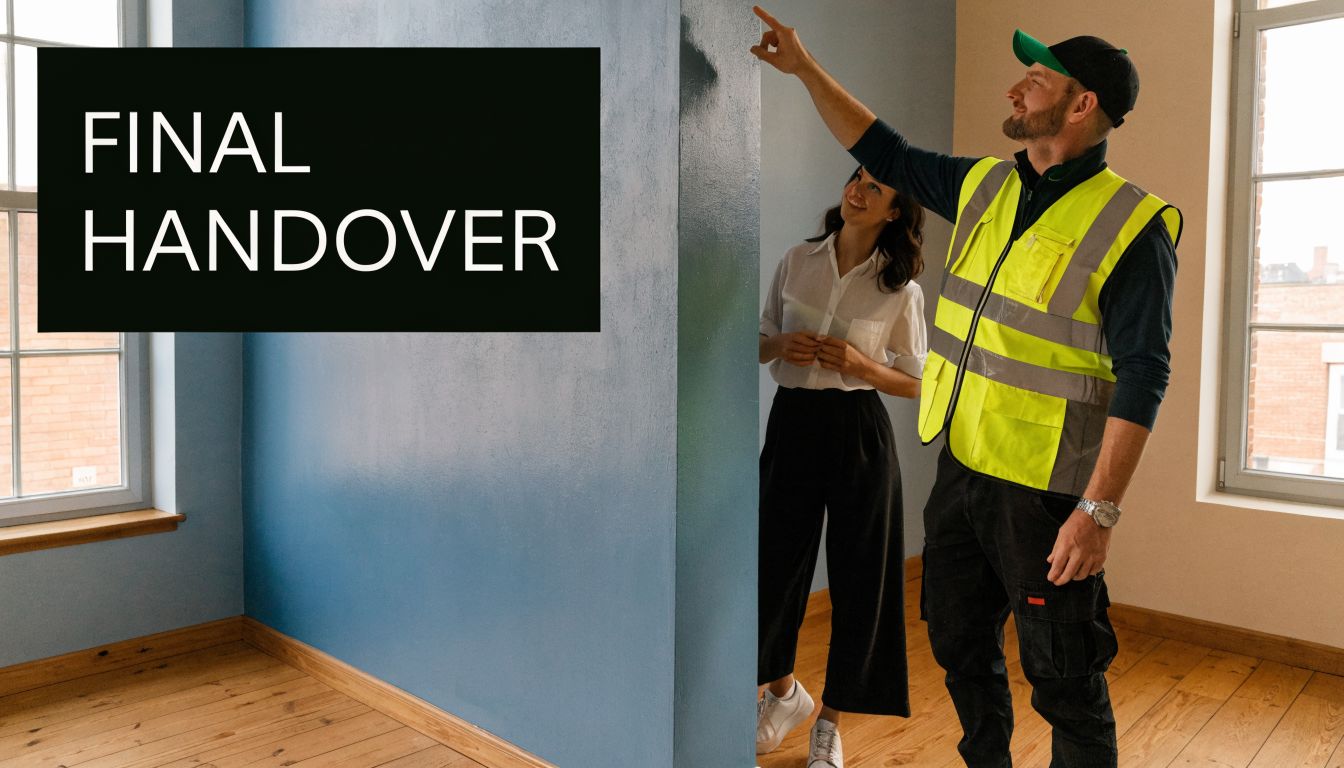
Do the final walkthrough in good light if possible, and do it with the site manager or lead painter. Walk room by room. Don’t just stand in the doorway and glance around.
What to inspect before final payment
Check finish quality with a practical eye:
- Colour and sheen consistency across each wall or trim run
- Straight cut lines at ceilings, cornices, skirtings, and frames
- No obvious misses behind doors, inside robes, or on return edges
- Clean site condition with no paint splatter on floors, glass, tiles, or fittings
- Completion of the agreed scope including minor items that are easy to overlook
Mark anything that needs attention and agree on when it will be fixed. Good painters expect a punch list. Problems usually arise when no one formalises it.
One more useful reference is this video, which can help homeowners think about what professional handover should feel like:
What you should receive at handover
A proper handover should include more than a clean wall. Ask for the practical closeout items.
- Leftover labelled paint for future touch-ups
- Written warranty details with clear coverage terms
- Care guidance on when newly painted surfaces can be cleaned or rehung
- Confirmation that rubbish, tape, coverings, and unused materials are removed
Good handover leaves no uncertainty. You know what was done, what products were used, and what support exists if an issue appears later.
That’s the point where the project feels complete.
Transform Your Home with Confidence
Finding the right result from a painters near me search isn’t about luck or chasing the cheapest quote. It comes down to process. Strong homeowners do four things well. They shortlist carefully, compare detailed quotes instead of headline prices, vet painters on real-world site management, and insist on a proper contract.
That approach matters even more in Melbourne, where apartment access, occupied homes, and older housing stock can turn a simple repaint into a messy project if the crew isn’t organised. The painters who do the best work usually make the job easier to live through as well. They plan access, protect surfaces, communicate clearly, and leave a finish that holds up.
If you treat painting as a trade service rather than a quick commodity, you’ll make better decisions. You’re not just buying colour. You’re buying preparation, judgement, reliability, and a smoother experience in your own home.
If you want a repaint handled with clear quotes, careful prep, strong communication, and a tidy handover, Newline Painting is a Melbourne team worth speaking to. They handle houses, apartments, pre-sale makeovers, detailed interiors, and exteriors across Greater Melbourne, with recognised products, a 7-year workmanship warranty, and a process designed to keep occupied homes running smoothly.