
A lot of Melbourne garages start the same way. Bare concrete, old tyre marks, a few oil spots that never really lift, and that dusty surface that always seems to creep into the house. Then the garage slowly becomes more than a place to park. It turns into storage, a workbench zone, a home gym, or the drop point for bikes, tools, prams and camping gear.
That's usually the point where the floor starts bothering people.
Concrete is functional, but it's not clean, sealed, or easy to maintain on its own. If the slab is patchy, stained or constantly shedding dust, the whole garage feels unfinished no matter how organised everything else is. Garage epoxy flooring changes that. Done properly, it gives the slab a sealed, durable surface that's easier to clean and far better suited to day to day residential use.
In Melbourne, there's another layer to it. Generic online advice often ignores local moisture conditions, attached garages, cooler mornings, and the temperature swings that can make or break an installation. What works in a dry overseas climate doesn't always translate well to a suburban slab in Victoria. That's where homeowners can get caught out, especially with DIY kits and rushed prep.
Table of Contents
- Introduction From Drab Garage to Dynamic Space
- What Exactly is Garage Epoxy Flooring
- Exploring Finishes From Classic to Custom
- Budgeting for Garage Epoxy in Melbourne
- The Critical Process of Installation and Preparation
- Choosing Your Melbourne Epoxy Flooring Contractor
- Maintaining Your Epoxy Floor for Lasting Durability
Introduction From Drab Garage to Dynamic Space
A typical callout starts with a garage that's still doing its job, but not doing it well. The slab is stained, the edges are powdery, and every sweep seems to raise more dust than it removes. People often tell me the same thing. They've painted walls, added shelving, maybe upgraded lighting, and the floor still makes the whole space feel rough.
That matters more than most homeowners expect. In Melbourne homes, the garage often connects directly to the house or sits under a bedroom, living room or study. If the floor is dusty, porous and hard to clean, it affects how usable the whole area feels. Once it's sealed and finished properly, the same garage can work as a cleaner storage zone, a proper workshop, or a space you don't mind walking through in socks.
Why the floor changes the whole room
A good epoxy floor doesn't just cover concrete. It changes how the space functions.
- Cleaning gets easier: Dirt, leaves and general grime sit on the surface instead of embedding into raw concrete.
- Oil and spill management improves: The floor is far easier to wipe down than an untreated slab.
- The garage looks intentional: Shelving, cabinets and tools look better when they're sitting on a finished base.
- The space becomes more flexible: A garage can handle parking, storage and weekend projects without feeling like a half-finished utility room.
A garage floor doesn't need to look flashy to be a major upgrade. It just needs to be sealed, even, and built for the way the space is actually used.
The gap between a floor that lasts and one that peels usually comes down to system choice, slab condition and preparation. That's where Melbourne homeowners need clearer advice than most general epoxy articles give.
What Exactly is Garage Epoxy Flooring
Garage epoxy flooring is a resin-based coating system applied over properly prepared concrete. In a Melbourne garage, that usually means more than adding colour. It means turning a dusty, porous slab into a hard-wearing surface that stands up better to tyres, tools, oil, and regular foot traffic.
It's a coating system, not just a coloured top layer
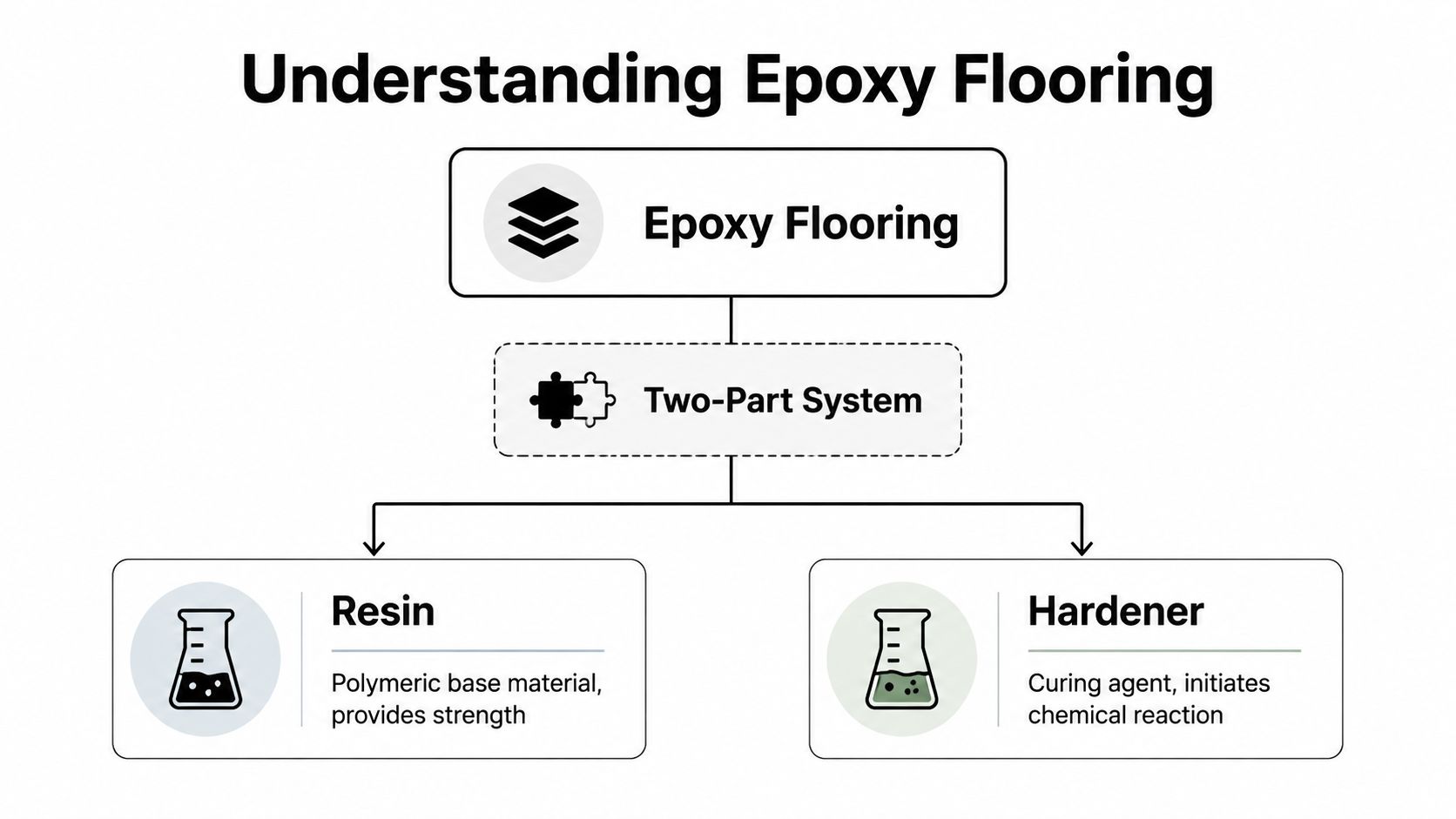
Proper epoxy uses two components: resin and hardener. Once mixed, they react chemically and cure into a bonded surface over the slab. That is very different from a thin garage floor paint sold as a weekend DIY product.
The difference shows up in service, not on day one. Thin coatings can look tidy straight after application, but they are far less forgiving if the slab has residual moisture, old contamination, patchy porosity, or hot tyre traffic. Those are common problems in Melbourne garages, especially on older slabs in the inner suburbs and bayside areas where moisture can be an issue.
A professional system is usually built in stages. The slab is prepared first, then coated with a primer if the condition calls for it, followed by a build coat and, depending on the finish selected, a decorative layer and topcoat. Each layer does a specific job. Bonding, film build, appearance, slip resistance, and stain protection are handled by different parts of the system, not by one thin coat trying to do everything.
If you want a broader overview of epoxy floor coating types and where they're used, that guide gives useful background.
Why solids content matters in a garage
For residential garages, 100% solids epoxy is usually the benchmark if the goal is durability rather than a quick cosmetic upgrade. It cures with more body, builds a thicker film, and avoids the level of shrinkage you get with weaker water-based products.
That matters on real slabs. A higher-build system handles minor surface variation better and gives the floor a more substantial finish underfoot. Lower-grade DIY products are cheaper up front, but they often wear through sooner, show tyre pickup earlier, and offer less tolerance for imperfect prep. That is the trade-off homeowners need to understand before comparing quotes with a hardware-store kit.
A practical comparison looks like this:
| System | What it's like in practice | Best for |
|---|---|---|
| Thin DIY epoxy paint | Basic colour change, limited build | Very light cosmetic use |
| Mid-range coating | Better film build, still dependent on slab condition and prep | Lower-demand residential areas |
| 100% solids epoxy | High-build, durable, smooth finish | Garages, workshops, storage-heavy spaces |
One more Melbourne-specific point. Product choice is tied to installation conditions. Cold winter mornings can slow cure times. Humid days can affect how some coatings behave. A garage under the main house also raises the question of odour during installation, which is why many homeowners ask for lower-VOC systems.
Practical rule: If a product is being sold mainly on how fast it goes down and how easy it is to roll on in an afternoon, expect it to perform more like paint than a professional garage coating.
Good epoxy flooring is not just the material in the bucket. It is the combination of the right system, the right slab preparation, and application matched to site conditions in Melbourne homes.
Exploring Finishes From Classic to Custom
Not every garage epoxy flooring job needs to look like a showroom. Some homeowners want a neat, neutral floor that hides dust and makes the room feel cleaner. Others want a decorative finish that becomes a feature. The right choice depends on how the garage is used, how much existing slab variation needs to be disguised, and how polished you want the final look to feel.

Solid colour for a clean workshop look
A solid colour finish is the most straightforward option. It gives the garage a crisp, uniform surface and suits homes where the rest of the fitout is already doing the visual work. Greys are common because they hide day-to-day dust well, but charcoals, lighter neutrals and custom tones can also work depending on wall colour and light levels.
Solid colour tends to suit:
- Practical garages: Places used for parking, storage and occasional bench work.
- Minimalist homes: Where a simpler floor matches the rest of the house.
- Owners who want easy touch-ups: A plain finish is easier to keep visually consistent than a more decorative system.
The trade-off is that a plain finish can show slab repairs, dirt and tyre marks more readily than a flake floor if the garage sees heavy use.
Flake systems for the most forgiving finish
A partial or full flake system is often the most balanced choice for Melbourne homes. It blends colour variation into the floor, helps disguise minor imperfections in older slabs, and adds a bit more texture underfoot depending on the topcoat and broadcast level.
That's why flake remains popular in family garages. It looks finished without trying too hard, and it handles real-life use well.
A full flake floor usually works best when the garage has:
- mixed storage and parking use
- visible patch repairs in the slab
- frequent foot traffic from the house
- a need for extra grip when the floor gets wet
The visual difference is easier to appreciate in motion:
Flake floors are often the safest recommendation when a homeowner wants something durable, forgiving and easy to live with. They hide more, age more gracefully, and don't feel overdesigned.
Metallic floors for a statement finish
A metallic epoxy floor sits at the premium end. This is the finish people choose when they want the garage to feel more like a designed extension of the home than a utility zone. The surface can create a marbled, layered effect with movement and depth that changes with light.
Done well, metallic finishes look striking. Done poorly, they can look patchy or overworked. They also demand better slab preparation and more careful installation because the visual effect doesn't hide defects the way flake does.
Here's the simple comparison:
| Finish | Visual style | Practical upside | Trade-off |
|---|---|---|---|
| Solid colour | Clean and simple | Neat, timeless look | Shows more dirt and imperfections |
| Full flake | Textured and balanced | Hides wear and repairs well | Less sleek than a plain gloss floor |
| Metallic | Decorative and high impact | Unique finish | Less forgiving, more premium in cost |
If the goal is a garage that still feels like a garage, flake is usually the safest bet. If the goal is a polished multi-use room, metallic can be worth it.
Budgeting for Garage Epoxy in Melbourne
A Melbourne homeowner will often get two quotes for the same garage and wonder why one is thousands lower. In practice, the gap usually comes down to preparation, coating build, and whether the installer has allowed for the slab that is there, not the slab everyone hopes is there.
That matters in Melbourne because garages here see a mix of cold mornings, damp periods, wind-blown grit, and plenty of slab moisture surprises, especially in older suburbs or homes built on reactive clay areas. Budgeting properly means pricing the floor as a system, not just a coloured finish.
What actually changes the quote
Area still matters, but it is only one part of the number. These are the main factors that shift the final cost:
- Garage size: A single garage is cheaper than a double, but small jobs can have a higher per-square-metre rate because setup and travel still need to be covered.
- Condition of the concrete: Cracks, surface weakness, oil staining, old paint, tyre residue, and spalling all add labour before coating starts.
- Chosen finish: Solid colour usually costs less. Full flake needs more material and more application steps. Metallic sits higher again because the finish is less forgiving.
- Moisture risk: Some slabs need extra testing, a moisture-tolerant primer, or a change in the system build.
- Edge detail and use case: Steps, rebates, stem walls, storage zones, and workshop use can all change the scope.
- Timing: Winter installs can take longer to schedule around temperature and curing conditions, which can affect labour planning.
DIY is where plenty of budgets go off track. The kit price can look manageable, but proper grinding, repairs, cleaning, moisture checks, and the risk of getting the timing wrong usually narrow the saving fast. For homeowners comparing coating options against paint, this guide on how to paint concrete floors properly is a useful baseline. It helps explain why cheap surface prep tends to become expensive later.
Typical Melbourne price ranges
Exact numbers vary by suburb, access, slab condition, and product system, but these are realistic planning ranges for professionally installed residential epoxy in Melbourne in 2026.
| Garage Size | Approx. Area (m²) | Estimated Cost (Solid Colour) | Estimated Cost (Full Flake) |
|---|---|---|---|
| Single garage | 18 to 24 m² | $2,200 to $3,500 | $3,000 to $4,800 |
| Double garage | 36 to 48 m² | $3,800 to $6,000 | $5,000 to $8,500 |
| Triple garage | 54 to 72 m² | $5,800 to $9,000 | $7,500 to $12,500+ |
Those numbers are not a shortcut for quoting. They are a budgeting guide. A clean newer slab in the outer suburbs can sit near the lower end. An older inner-suburban garage with previous coatings, cracks, and moisture issues can move quickly to the upper end or beyond it.
One point is often missed in online articles written for the US market. Australian products, local labour rates, disposal costs, and site standards change the math. Melbourne homeowners should expect higher costs for proper mechanical preparation and compliant installation than generic overseas guides suggest.
Where cheaper quotes usually cut corners
A low quote is not always a bad quote, but it should be read carefully. The usual exclusions are:
- mechanical grinding instead of acid etching or light sanding
- crack and surface repair
- moisture testing or a primer suited to the slab
- full flake broadcast coverage versus partial coverage
- a UV-stable topcoat, especially where the garage gets sun at the opening
- clear warranty wording for workmanship and product supply
I tell homeowners to look at the scope before they look at the total. If one quote is much lower, ask what has been removed. That is usually where the answer sits.
A good quote should state how the concrete will be prepared, what coating system is included, how many coats are being applied, whether repairs are included, and what happens if moisture or contamination is found after grinding. If those points are vague, the homeowner is usually carrying the risk.
Epoxy can make the garage feel cleaner, brighter, and easier to maintain. It may also improve buyer appeal because the space presents better. I would not budget around a promised resale percentage, though. The practical value is in durability, appearance, and avoiding the cost of having to strip and redo a failed floor.
The Critical Process of Installation and Preparation
The finish coat gets all the attention, but preparation is what decides whether a garage epoxy floor lasts. In Melbourne, this matters even more because slab moisture and weather conditions can change quickly enough to punish shortcuts.
Most failures start before the coating goes down
The core issue is bond. Epoxy doesn't perform well if it's sitting on contamination, weak surface cream, trapped moisture or a slab profile that's too smooth. According to the ArmorGarage epoxy specifications, proper adhesion of 420 psi is achieved on concrete prepared to CSP 3 with relative humidity below 80%. Skip that preparation and adhesion can drop to less than 100 psi, which is where blistering and delamination under vehicle loads become far more likely.
That's a massive difference, and it's why surface prep isn't an optional extra.
If an installer talks more about colour flakes than moisture testing and grinding, they're focusing on the part you can see, not the part that makes the floor stay put.
For homeowners comparing methods, this practical guide to painting concrete floors helps explain why the slab itself needs attention before any coating goes on.
What a proper install actually includes
A professional epoxy installation usually follows a sequence like this:
-
Inspection and moisture assessment
The slab is checked for curing condition, contamination, previous coatings, cracking and signs of moisture movement. -
Mechanical preparation
Diamond grinding or other suitable mechanical profiling opens the surface. The goal is a profile that gives the coating something to bite into. -
Repairs
Cracks, holes, joints and damaged sections are repaired before the main coating layers are applied. -
Dust control and cleaning
Any residue left behind can interfere with bond. Dust extraction matters. -
Primer and body coats
The selected system is applied in the required build, whether solid, flake or metallic. -
Topcoat
A finishing layer adds wear resistance, helps with cleaning, and can improve UV and chemical performance depending on the product.
Melbourne conditions change the timing
Generic tutorials often fail local homeowners. Melbourne garages can be cold in the morning, warm in the afternoon, and damp at the wrong time of day. A slab that looks dry isn't always ready. Dew point, substrate temperature and humidity all matter.
A few practical realities apply on local jobs:
- Fresh concrete can't be rushed: Coatings need a properly cured slab.
- Cool slabs can trap problems: A surface that's too cold can interfere with bond and cure.
- Rain and humidity affect timing: The install window has to suit actual site conditions, not just the booking date.
- Attached garages need careful product choice: Odour and ventilation are part of the planning.
This is why I'd rather delay a job than force it onto a slab that isn't ready. The floor might still cure. It just may not stay bonded the way it should.
Choosing Your Melbourne Epoxy Flooring Contractor
A polished quote and a few glossy photos don't tell you much about how an epoxy floor will perform. The right contractor is the one who talks clearly about slab condition, preparation, compliance and system choice before talking about colour charts.
Questions worth asking before you sign
The Galaxy Concrete Coatings article cites a 2025 Master Painters Australia report saying 42% of Melbourne epoxy failures are linked to ignoring local moisture vapour rates. It also notes that contractors who don't adhere to Australian slip resistance (R10) and fire standards for attached residential garages can risk invalidating home insurance.
That gives homeowners a solid screening checklist.
Ask every contractor these questions:
-
How do you test the slab for moisture issues?
If the answer is vague or dismissive, keep looking. -
What preparation method do you use?
Mechanical preparation matters. You want a clear answer, not “we'll clean it up and coat over it”. -
What system are you applying?
Ask whether it's a true epoxy system, what layers are included, and what topcoat is specified. -
Are you insured and what does the warranty cover?
You want written clarity on workmanship and exclusions. -
How do you address slip resistance for residential garages?
This matters if the floor gets wet or if the garage connects directly to the house.
If you're comparing local providers, Newline Painting's epoxy floor painting service is one example of the type of service page that should outline system use, application context and project suitability.
Red flags that usually cost more later
Some warning signs repeat across failed jobs:
| Red flag | Why it matters |
|---|---|
| “No need to grind” | Poor bond risk goes up immediately |
| No mention of moisture | The installer may be ignoring a common failure point |
| Very fast turnaround promises | Cure and prep times may be unrealistic |
| Generic imported DIY-style products | Product suitability and compliance can be unclear |
| Quote lacks prep detail | Corners may be getting cut where you can't see them |
A good contractor should be comfortable explaining why your slab is suitable, what could go wrong, and how they’re managing those risks.
That kind of honesty is usually a better sign than a cheap quote.
Maintaining Your Epoxy Floor for Lasting Durability
Once a garage epoxy floor is installed properly, maintenance is straightforward. The biggest mistake homeowners make is treating it like bare concrete and using rough cleaning habits that aren’t needed.
Simple care that keeps the floor looking right
For regular upkeep, keep it simple:
- Sweep dust and grit off regularly: Fine grit acts like sandpaper under shoes and tyres.
- Use a pH-neutral cleaner for mopping: Harsh chemicals and abrasive cleaners can dull the finish.
- Wipe spills sooner rather than later: Even resistant floors are easier to keep clean if oil and grime don’t sit.
- Lift, don’t drag, sharp metal items: Tool chests, jack stands and machinery can mark any coating if handled roughly.
A soft broom, microfibre mop and sensible habits do most of the work.
What to expect over the long term
Melbourne conditions still matter after installation. The verified data notes that Bureau of Meteorology-related guidance discussed in this video reference shows installs are riskiest when slab temperatures are below 12°C, and that polyaspartic topcoats can triple flexibility and extend life to 15+ years in these conditions.
That doesn’t mean every floor automatically lasts that long. Lifespan still depends on use, sunlight exposure, prep quality and the coating system chosen. But it does show why topcoat selection and install timing aren’t minor details in Melbourne garages.
For attached garages with direct sun through an open door, some colour change over many years is still possible, especially on darker or more decorative finishes. A UV-stable topcoat helps manage that. So does choosing a finish that suits the space instead of forcing a high-gloss showroom look onto a hard-working family garage.
A well-installed floor should be easy to live with. That’s the definitive benchmark.
If you’re weighing up garage epoxy flooring for your home, Newline Painting can inspect the slab, explain the preparation required, and outline suitable coating options for Melbourne conditions in a clear written quote.