Driveway painting in Australia is typically priced at AUD $30 to $60 per square metre, and for a standard Melbourne driveway the final price often lands somewhere from $1,500 to over $4,000 depending on size, preparation, and coating type. That's why two quotes for driveways that look similar from the street can end up far apart once the painter inspects the slab properly.
Considering driveway painting cost typically happens at the same moment. The concrete still works, but it looks tired. It's faded, patchy, stained, or dragging down the front of the house. You don't want the cost of resurfacing or replacing the slab, but you also don't want to pay for a paint job that starts peeling after the first wet winter and hot summer.
That's the key question in Melbourne. Not just “how much does it cost?” but “what am I paying for, and will it last?” Weather, UV, rain, oil staining, surface movement, and the condition of the concrete matter more than most online price guides admit. A fair quote should explain those variables clearly, not bury them in fine print.
Table of Contents
- How Much Does Driveway Painting Cost in Melbourne
- What Drives the Final Quoted Price
- Sample Driveway Painting Quotes and Per Metre Rates
- Acrylic vs Epoxy Coatings What to Choose for Your Driveway
- DIY vs Hiring Professional Painters
- How to Get a Reliable Driveway Painting Quote
- Frequently Asked Questions about Driveway Painting
How Much Does Driveway Painting Cost in Melbourne
You get home after a week of Melbourne rain, the driveway still looks tired, and two quotes land in your inbox with a big gap between them. That usually happens because driveway painting is priced on condition first, square metres second.
For most Melbourne homes, painters quote by area, but the per metre figure only makes sense once the slab has been checked properly. Sun exposure, drainage, existing stains, past coatings, and how much the concrete has opened up over time all affect how long the coating will last and how much prep is needed before any paint goes down.
A fair starting point for a professional job is a per square metre rate, then adjustments based on the driveway itself. In practice, Melbourne owners should treat any early price as provisional until the contractor has seen the surface, checked for oil contamination, and confirmed whether the concrete is sound enough to coat rather than repair.
That matters more in Melbourne than many people expect. Strong UV breaks down cheaper coatings faster on exposed driveways. Winter moisture and poor fall can trap water in low spots. Older suburban slabs often have patch repairs, surface dusting, or hairline cracking that look minor from the street but add time and material cost once work starts.
If you want a plain-English overview of the process behind the price, this guide on how to paint concrete properly explains the preparation and coating stages that should already be reflected in a serious quote.
The useful comparison is not just DIY versus professional. It is a short-life coating system with light prep versus a job that is prepared well enough to hold up through Melbourne weather. A cheap quote can still be expensive if the coating starts lifting, hot-tyre marking, or wearing through after a short time.
Surface cleanliness is a good example. A driveway can look clean and still be carrying grime, mould, old sealer residue, or tyre contamination that affects adhesion. For a visual example of how much buildup can sit on concrete before prep begins, see this Colorado Springs driveway cleaning.
The practical middle ground for many Melbourne homes is straightforward. If the slab is structurally sound, painting is usually far cheaper than major concrete work and can make an old driveway presentable again. The question is whether the quote allows for the prep and coating system your driveway needs, rather than a low entry price that grows once the job starts.
What Drives the Final Quoted Price
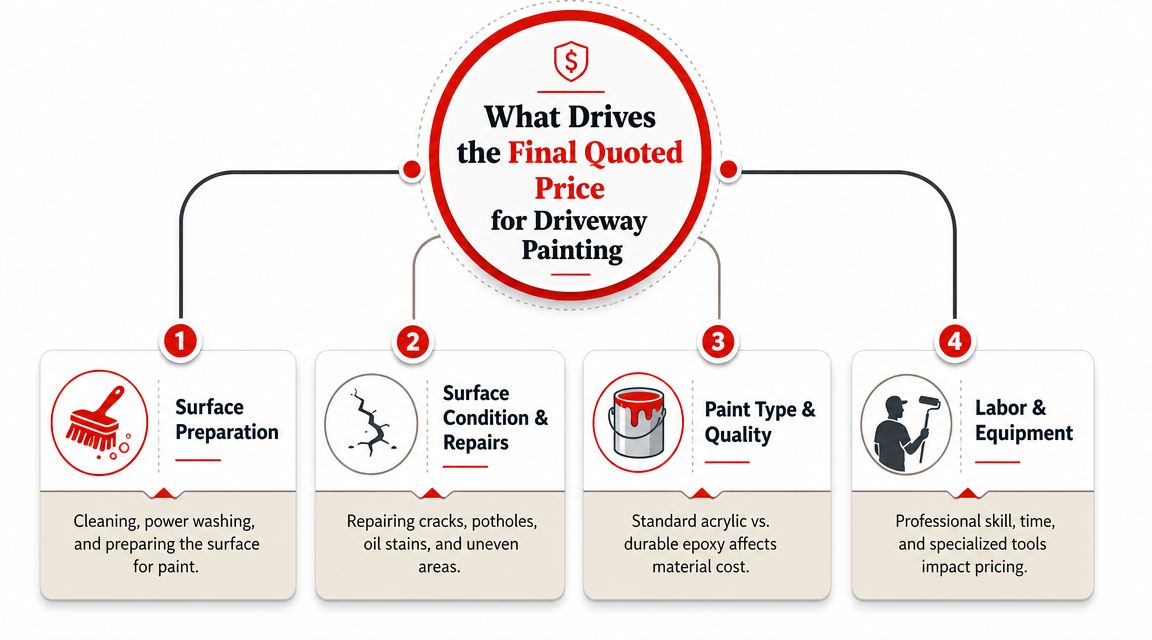
A driveway painting quote isn't just paint plus labour. It's a stack of decisions. Some of them improve durability. Some just make the number look cheaper at the start.
Preparation is where good jobs are won or lost
The biggest driver is usually surface preparation. Concrete has to be clean enough and sound enough for the coating to bond. That can involve pressure washing, degreasing oil marks, removing loose material, grinding slick or contaminated areas, and patching local defects.
If you want to see why cleaning matters before any coating goes down, this Colorado Springs driveway cleaning example is a useful visual reference. It's not about Melbourne pricing, but it does show how much contamination can sit in concrete before prep even begins.
A lot of homeowners underestimate how much the condition of the slab affects cost. If a driveway has cracking, oil contamination, or moisture issues, the cheapest painting quote can become false economy because prep and repair can exceed the coating cost, as noted in HomeAdvisor's driveway cost guidance. That's especially relevant in Melbourne, where weather exposure and substrate movement can shorten coating life if the base problems aren't fixed first.
A cheap quote often removes the hardest parts of the work. The problem is those are the parts that stop peeling.
There's also a difference between “washed” and “prepared”. A quick hose-down or light pressure clean isn't the same as proper contamination removal. On older slabs, painters may need mechanical abrasion so the new product can grip.
For a technical overview of how coatings are applied to concrete, this guide on how to paint concrete properly is worth reading before you compare quotes.
Coating choice changes both price and outcome
The next major factor is the coating system. Basic acrylic products usually cost less upfront. Heavier-build or more specialised systems cost more in materials and often in labour too.
Brushworks' Australian pricing guide puts professional concrete driveway painting at AUD $30 to $60 per square metre, and lists materials such as water-based acrylic sealers at roughly AUD $149 per 20 L, solvent-based acrylic sealers around AUD $180 per 20 L, epoxy or polyurethane sealers near AUD $220 per 20 L, and paving paint at about AUD $425 to $500 per 20 L in its driveway painting cost breakdown. The same source notes that standard 4 L sealers cover about 20 m², while paving paint may cover only 12 to 14 m² per 4 L, which pushes the cost per square metre up before labour is added.
Area still matters, of course. Larger driveways need more materials, more cutting-in, and more time on site. But even two driveways with the same area can price differently if one needs extensive prep and the other doesn't.
Here's the practical order of cost drivers most painters see on site:
- Condition first: Cracks, oil, old coating failure, and moisture can change the whole scope.
- Prep second: Cleaning, grinding, patching, and edge work are labour-heavy.
- System third: Acrylic, epoxy, sealing, and anti-slip additives all affect material cost.
- Size last: Bigger driveways multiply everything above.
Sample Driveway Painting Quotes and Per Metre Rates
A Melbourne homeowner gets three quotes for the same 70 m² driveway. One is cheap, one sits in the middle, and one is much higher. The difference usually is not the square metres. It is what each painter has allowed for prep, the coating system, weather exposure, and how much risk they are taking on if the slab is already failing.
Per metre rates are useful for early budgeting, but they only help if you read them the right way. A low rate can still become an expensive job if the quote leaves out pressure cleaning, crack repairs, degreasing, anti-slip additive, or a second coat on exposed areas that cop full Melbourne sun and rain.
What the per metre rate actually means
A square metre rate usually rolls up labour, masking, surface cleaning, minor repairs, and product application. It should also reflect access, edge work, drying time between coats, and whether the painter expects the existing surface to accept the new coating without extra grinding or stripping.
For rough planning, many Melbourne homeowners budget within the professional ranges already noted earlier in this article. The useful part is not the rate by itself. The useful part is what sits behind it.
Compare quotes line by line. Area, prep, coating brand or type, number of coats, slip resistance, and curing time should all be clear.
Sample driveway painting cost scenarios in Melbourne 2026
These sample figures show how a quote can look once area is applied to a standard residential driveway. They are budget examples only, not fixed prices.
| Driveway Size | Approx. Area (m²) | Typical Budget Range | What Usually Affects the Final Number |
|---|---|---|---|
| Small single-car driveway | 50 | AUD $1,500 to $3,000 | Condition of concrete, edge detail, stain removal |
| Medium double-car driveway | 70 | AUD $2,100 to $4,200 | Prep level, coating choice, anti-slip additive |
| Large extended driveway | 90 | AUD $2,700 to $5,400 | More labour, more product, longer site time |
Those ranges make sense for many suburban Melbourne jobs, but real quotes drift up or down for reasons the table cannot show.
A newer, clean slab with open access is usually straightforward. An older driveway in Bayside or the eastern suburbs that has seen years of UV, tyre wear, leaf staining, and patch repairs often needs more than a wash and two coats. That is where cheap quotes start to fall apart.
Why two similar driveways can price differently
The biggest cost jumps usually come from conditions on site:
- Oil and tyre staining: Proper degreasing takes time, and some stains still bleed through cheap coatings.
- Failed old paint: Peeling or flaking areas often need grinding or full removal before recoating.
- Moisture issues: If the slab is trapping moisture, the wrong product will fail early.
- Steep or exposed driveways: These often need a stronger anti-slip finish, especially where winter rain sits on the surface.
- Tight access or detailed edges: Gates, fencing, side paths, and borders slow the job down.
This is also why comparing a driveway quote to a garage epoxy flooring cost guide can be useful. The substrates and use cases are different, but the same rule applies. Surface prep and coating specification usually decide whether the price is fair.
How to read a sample quote properly
A solid quote should tell you more than the total. It should show whether you are paying for a cosmetic refresh or a system with a better chance of lasting through Melbourne summers and wet winters.
Look for these details:
- Prep included: pressure cleaning, degreasing, crack filling, grinding, or acid etching
- Coating system: acrylic, heavier-build system, sealer, and whether anti-slip is included
- Number of coats: one coat and two coats are not the same job
- Repairs excluded: many low quotes leave patching and failure rectification out
- Drying and return-to-use time: important if the driveway is your main access
Homeowners who also read broader maintenance advice, such as this guide for Arizona property maintenance, will notice the same pattern. Coating life depends as much on exposure and upkeep as it does on the day the paint goes down.
The safest way to use per metre rates is as a filter, not a final answer. If two quotes are far apart, ask what prep has been allowed for, what product is being used, and what happens if the painter finds failed coating or contamination after cleaning. That is where hidden surprises usually start.
Acrylic vs Epoxy Coatings What to Choose for Your Driveway
A driveway can look sound on a dry day, then show every weakness after a week of Melbourne rain and a hot afternoon. That is why coating choice matters. The cheaper product on the quote can become the more expensive job if it peels, chalks, or wears through early.
When acrylic makes sense
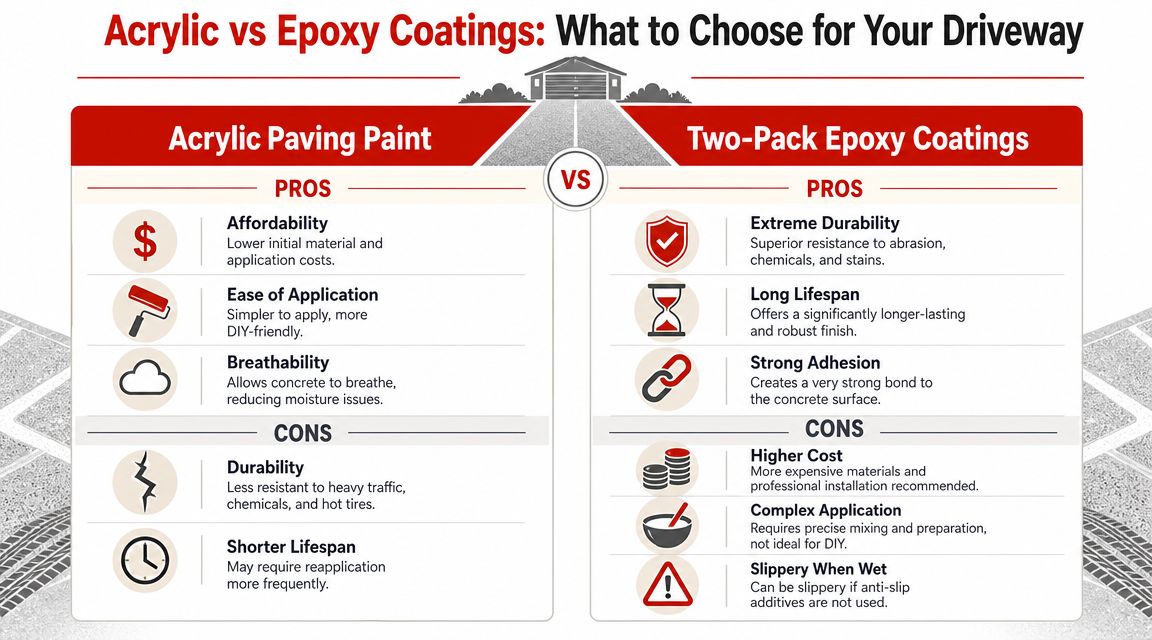
Acrylic is usually the practical choice for open residential driveways in Melbourne. It handles UV better than many people expect, it is more forgiving on older concrete, and it often suits driveways that need a visual refresh rather than a heavy-duty coating system.
It works best on a slab that is weathered but stable. If the concrete has minor porosity, older patching, or a few hairline cracks, acrylic is often easier to apply and easier to maintain later. Recoating is simpler too.
Acrylic usually suits these jobs:
- Street-facing cosmetic upgrades: You want the driveway to look clean and consistent with the rest of the house.
- Standard household traffic: Cars, foot traffic, bins, and day-to-day use without constant turning of heavy vehicles.
- Older concrete with some movement: Acrylic tends to be the safer call where the slab is not perfect but still paintable.
- Tighter budgets: Money goes further when the goal is presentation and reasonable service life, not maximum chemical resistance.
The trade-off is wear. Acrylic can mark sooner under hot tyres, regular turning, and oil drips if the surface is not maintained. On a steep driveway or one that gets ponding water, product choice and anti-slip matter as much as colour.
For broader maintenance thinking, this guide for Arizona property maintenance is a useful reminder that climate affects sealing and recoat planning, even though Melbourne conditions are different.
When epoxy is worth paying more for
Epoxy suits harder use, but only in the right setting. It gives a tougher film and better resistance to oil, abrasion, and tyre traffic, which is why it is often a stronger option for protected concrete and lower-exposure areas.
That does not automatically make it the best driveway coating.
On an exposed Melbourne driveway, epoxy can be a poor buy if the slab has moisture coming through, old coating failure, or too much weather exposure for that system. Full sun, wet winters, and inconsistent substrate condition can shorten its life fast if the specification is wrong. I would rather put a well-prepared acrylic system on suitable concrete than force epoxy onto a slab that is likely to reject it.
Epoxy is worth the extra spend when:
- The driveway has high wear zones: turning areas, frequent vehicle use, or repeated oil exposure
- The concrete is dense, clean, and properly prepared: not dusty, damp, or contaminated
- The area has some protection: covered sections or adjoining spaces where exposure is lower
- The quote allows for proper prep: grinding, repairs, moisture checks, and the right primer where needed
This is the part many homeowners miss. Epoxy is less forgiving. If the slab still holds moisture or contamination after cleaning, the coating can fail even when the product itself is good.
If you are comparing tougher systems for enclosed or semi-protected concrete, this page on garage epoxy flooring options is a useful reference point because the performance conditions are different from an exposed driveway.
For most Melbourne homes, the decision is straightforward. Choose acrylic for a sound outdoor driveway where appearance, UV exposure, and easier maintenance matter most. Choose epoxy only when the surface condition, traffic level, and site exposure justify the extra prep and cost.
DIY vs Hiring Professional Painters
A Melbourne driveway can look fine after a weekend paint job, then start peeling after the first wet spell or a run of hot UV-heavy days. The problem is usually not the topcoat. It is poor prep, moisture left in the slab, oil contamination near parking zones, or a coating choice that never suited outdoor exposure in the first place.
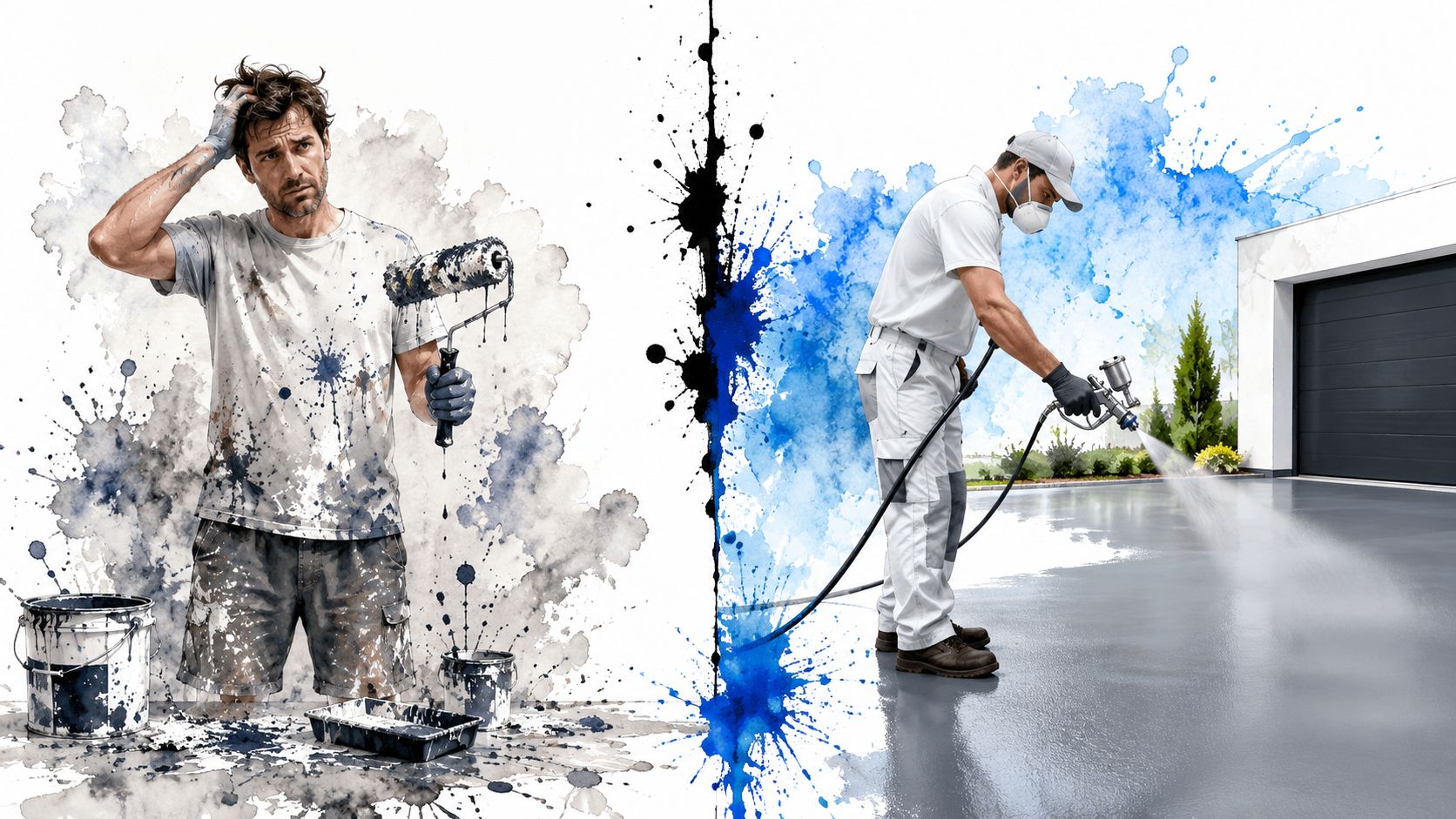
DIY can save money, but only on the right driveway
DIY makes sense on a small, plain concrete driveway that is already clean, sound, and free of sealer failure. If the slab has tyre marks, hairline cracking, chalky concrete, old flaking paint, or low spots that stay damp, the cheap version disappears fast. You end up buying cleaners, filler, masking materials, extra rollers, and often more coating because rough concrete absorbs more than expected.
Time is the hidden cost.
Most homeowners allow for painting. They do not allow for pressure cleaning, degreasing, waiting for the slab to dry properly, patching defects, and then watching the weather so the coating has a fair chance to cure. In Melbourne, that timing matters. Cool nights, winter moisture, leaf stain, and strong summer sun all shorten the margin for error.
DIY jobs usually fail for a few predictable reasons:
- Prep stops too early: the slab looks clean but still has dust, grease, old sealer, or loose surface fines
- The wrong product gets used: a generic concrete paint may be fine for paths and poor for a driveway with turning traffic
- Weather windows get ignored: coating onto damp concrete or just before rain is one of the quickest ways to waste money
- Coverage gets stretched: trying to make one tin go further often leaves a thin, short-life finish
- The second attempt costs more: once a coating starts peeling, removal and repair usually add more labour than doing it properly the first time
If you are refreshing the whole frontage, not just the driveway, smaller presentation upgrades can help tie the look together. This guide shows one way to upgrade your Cleveland home's garage door appearance.
What a professional quote should actually buy
A professional painter is not just there to roll on product faster. The value is in diagnosis and process. A good contractor should be able to tell you whether the slab is suitable for coating, what prep it needs, which areas are likely to fail first, and whether painting is even the right fix.
On a straightforward driveway, hiring a pro often makes sense because the cost of failure is high. If a DIY job peels, the next contractor has to remove loose material, clean around failed edges, and work back to a stable surface before recoating. That extra labour is where the bargain disappears.
You are also paying for job control. That includes cleaner edges, better masking, safer handling of washdown and overspray, and a clearer plan for vehicle access while the coating cures. On occupied homes, those practical details matter more than many people expect.
Insurance matters too. If trades are using pressure cleaning equipment, solvents, grinders, or spray gear on your property, check that they carry proper public liability insurance for painters. It is a simple check and it tells you a lot about how seriously the contractor runs the job.
This video gives a useful sense of the application side of the work and why surface handling matters:
A practical rule for choosing
DIY is reasonable if the driveway is small, the concrete is in good condition, and you are prepared to spend most of your time on cleaning and prep rather than painting.
Hire a professional if the driveway is large, visible from the street, already coated, oil-stained, cracked, or exposed to hard sun and weather. Those are the jobs where the specification, prep standard, and cure timing decide whether you get a finish that lasts or a redo in a year or two.
How to Get a Reliable Driveway Painting Quote
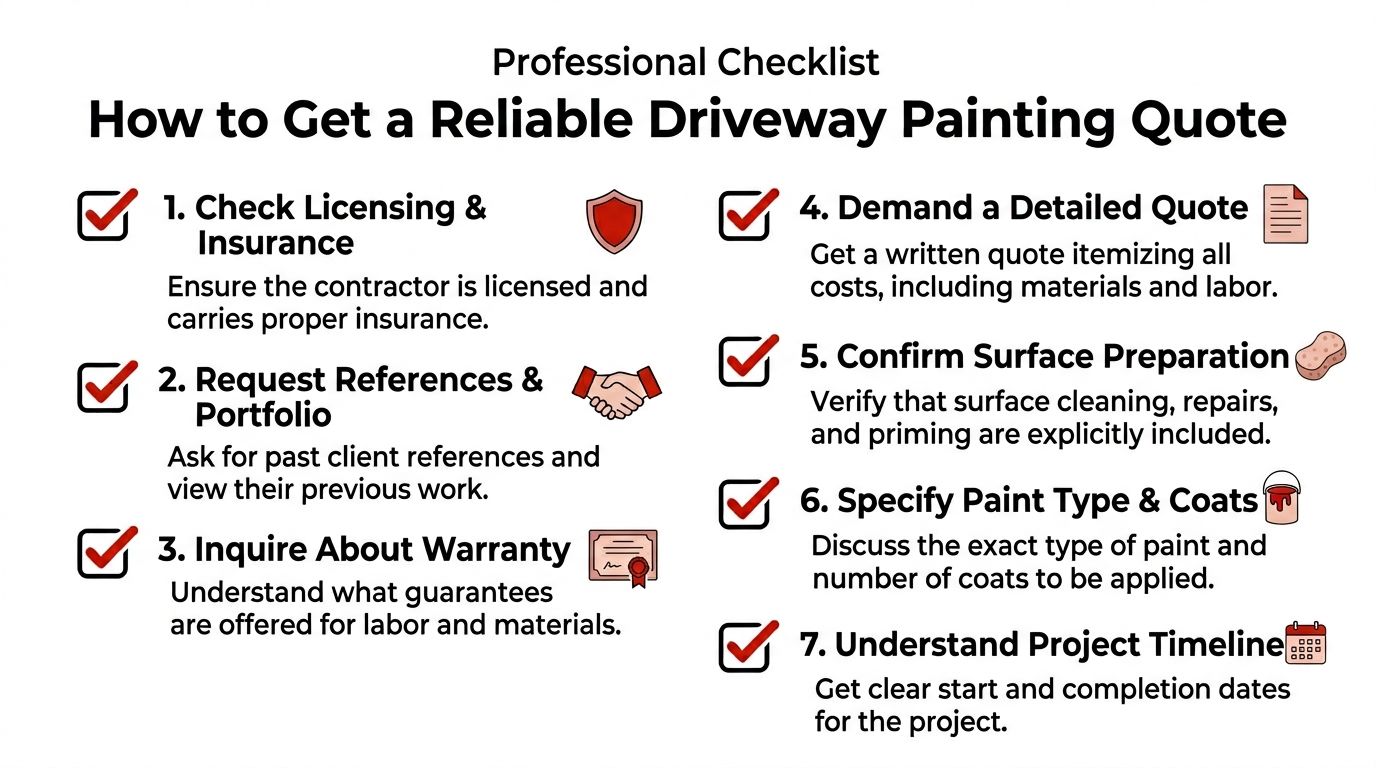
A homeowner in Melbourne gets three driveway quotes. One says “clean and paint” with a single total. Another is higher, but it spells out cleaning, degreasing, crack filling, drying time, primer, topcoats, and when the car can go back on. The second quote is the one you can compare.
What should be written into the quote
A reliable driveway painting quote starts with the slab condition. In Melbourne, that matters because a driveway that looks fine at a glance can still have old sealer residue, tyre wear, moisture issues, or UV-dried surface weakness that shortens coating life.
The quote should state exactly what happens before any coating goes down. That means pressure cleaning, oil treatment, mould or lichen removal, crack or surface patch repairs if included, and grinding where adhesion is likely to be a problem. If the driveway has been painted before, the quote should also say whether failed coating will be removed or coated over. That one line changes the job cost and the result.
A written quote should let you check five things fast:
- Preparation scope: cleaning, degreasing, stain treatment, grinding, repairs, and whether all of that is included in the price
- Coating system: the product type, primer if required, topcoats, and whether a sealer or non-slip additive is included
- Coverage and exclusions: the square metres allowed for, edges, kerbs, crossover area, and what is not included
- Weather and curing conditions: how rain, cold mornings, or poor drying conditions affect timing and recoat windows
- Access after the job: when you can walk on it, park on it, and wash it
If those details are missing, the quote is not finished.
The other point I tell homeowners to check is whether the quote deals with lifespan in a practical way. A cheaper price can still be poor value if it skips prep on a sun-baked or contaminated slab and needs redoing much earlier. Melbourne weather is hard on exposed driveways. Strong UV, winter damp, leaf staining, and repeated wet-dry cycles all punish weak preparation.
The best quote is the one that makes the scope hard to argue about later.
Insurance should be easy to verify as well. If a contractor is using pressure cleaning gear, grinders, or solvent-based products on your property, ask for proof of public liability insurance for painters.
Questions worth asking before you accept
Good questions force clear scope.
Ask the painter these before you say yes:
-
What happens if you find oil contamination or old coating failure after cleaning?
This tells you whether the price includes realistic prep or only the easy version of the job. -
What exact products are you quoting?
Ask for the coating type, primer if needed, and whether slip resistance is part of the system. “Concrete paint” is not enough detail. -
What is excluded from this price?
Hidden extras often include these items. Repairs, crack filling, grinding, second visits, and return trips after weather delays should be clear. -
How are you allowing for Melbourne weather?
A solid answer mentions dry substrate conditions, forecast checks, and cure time. Anyone promising to push through light rain or cold, damp conditions is taking shortcuts. -
What does the warranty cover? Workmanship and product performance are not the same thing. Get the warranty terms in writing and check what is excluded, especially peeling caused by slab condition or moisture.
-
Will I get a written scope before work starts?
That should include area, prep, coating system, number of visits, and re-entry times.
The simplest way to compare quotes is to line them up by scope, not by total price. If one contractor allows for grinding, stain treatment, and proper cure management, and another does not, they are not quoting the same job.
That is how hidden surprises start.
Frequently Asked Questions about Driveway Painting
How long does driveway painting take
Most driveway painting jobs take more than just the coating day. Cleaning, drying, repairs, and cure time all matter. A simple, well-maintained driveway moves faster than one with oil staining, patching, or weather delays.
For Melbourne homes, the schedule should be based on site condition and forecast, not on a rushed promise.
How soon can you walk or park on it
That depends on the coating system and the weather on the day. Some products dry to touch relatively quickly but still need longer before they can handle tyres without marking or damage.
The safest approach is to ask for written re-entry and vehicle access instructions as part of the quote. If the contractor can't provide that clearly, that's a warning sign.
Is driveway painting worth doing before selling
Often, yes, if the slab is sound and the current appearance is dragging down the front presentation of the property. A clean, evenly coated driveway can help the exterior feel maintained and consistent with the rest of the home.
It's especially useful when paired with other practical presentation work such as exterior painting, pre-sale painting, or a broader house painting refresh.
Can every concrete driveway be painted
No. Some driveways are poor candidates until the underlying problems are addressed. Ongoing moisture issues, structural cracking, heavy contamination, or a badly failing previous coating can make painting a short-term fix at best.
If the concrete is unsound, repainting can become a cosmetic layer over a bigger problem. In that case, it's better to find that out before the job starts than after the coating fails.
If you want a firm answer on your own driveway, an on-site inspection is the only reliable way to price it properly and judge whether painting is the right move.
If you're comparing driveway painting options in Melbourne, Newline Painting can provide a free on-site quote with clear scope, preparation details, coating recommendations, and realistic advice on whether your driveway is worth painting or better left for repair or resurfacing first.