You're probably looking at one of two things right now. A dark red exterior that makes the house feel older than it is, or an interior brick wall or fireplace that once felt full of character and now just feels heavy. In Melbourne, both are common. So is the question that follows: should you paint it, and if you do, how do you make sure it lasts?
Painting brick can work very well, but it's not a casual weekend job. Brick is porous, mortar behaves differently again, and Melbourne weather adds another layer of risk for exterior work. If the wall is dirty, damp, powdery, salty, or already moving, paint won't hide that. It will lock the problem in and then fail on top of it.
Done properly, though, painted brick can sharpen up a pre-sale presentation, modernise an interior feature wall, and give tired exterior masonry a more maintained finish. This guide covers how to paint brick walls the right way, with the practical details most generic tutorials skip.
Table of Contents
- Is Painting Your Brick Wall a Good Idea
- The Critical Preparation Phase Cleaning and Repair
- Choosing the Right Primer and Paint for Masonry
- Application Methods Brush Roller or Sprayer
- Weather Drying Times and Finishing Touches
- When to Hire a Professional Painter in Melbourne
- Frequently Asked Questions About Painting Brick
Is Painting Your Brick Wall a Good Idea
If the brick is sound, dry, and visually dragging the house down, painting can be a smart move. That's one reason painted brick has become more common in Victoria. Master Painters Australia Victoria reported a 35% increase in residential repaint projects involving exterior brick surfaces between 2020 and 2024 in its 2024 annual report, and the same verified dataset notes that freshly painted brick exteriors in Melbourne aligned with higher sale outcomes in REIV figures and stronger curb appeal in the Domain Buyer Sentiment Report 2025.
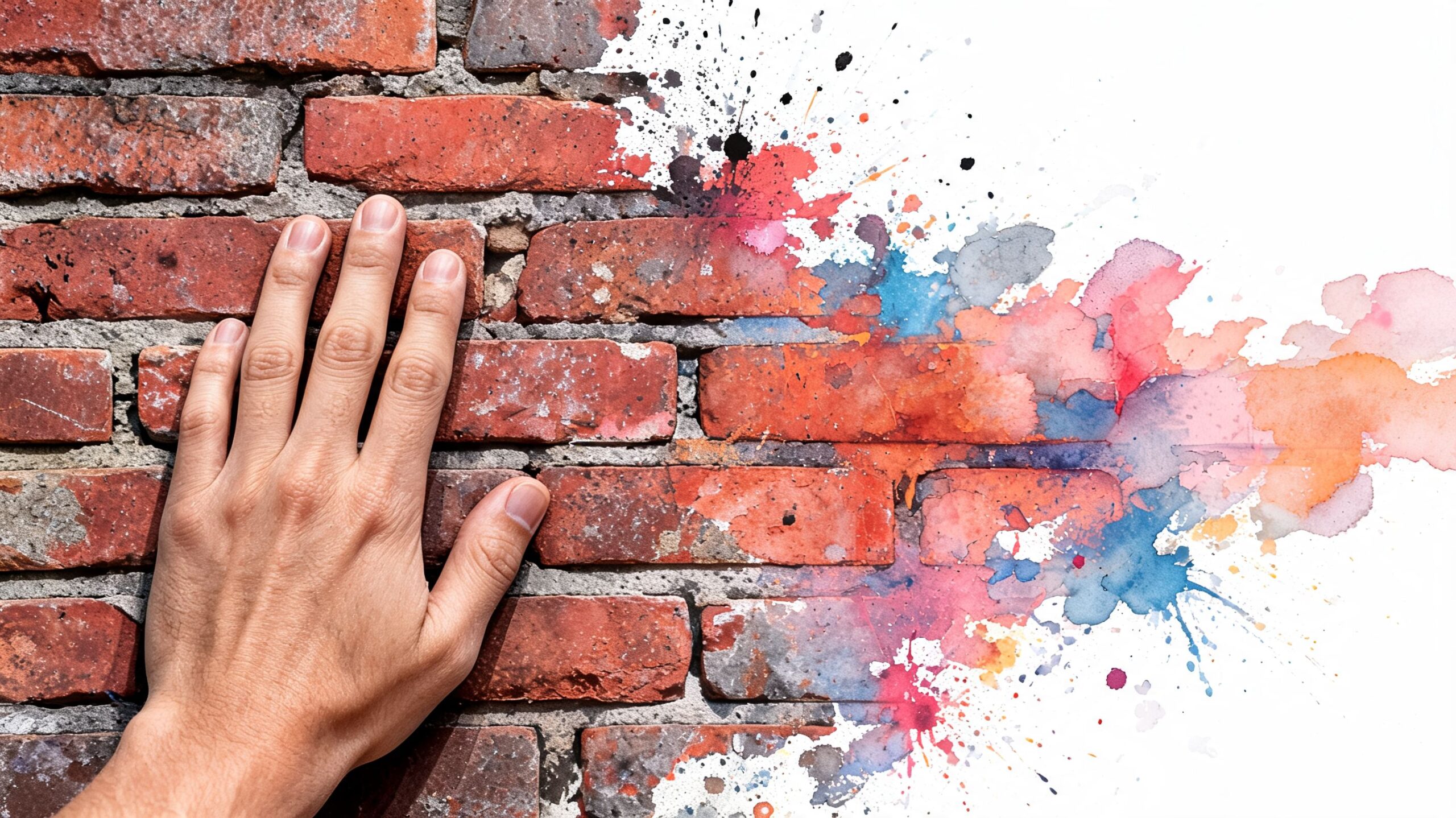
That doesn't mean every brick wall should be painted. Brick isn't plasterboard. Once you paint it, you've changed the maintenance cycle. You'll need to keep it coated, clean it properly, and repaint it when the system ages. For some homes, especially those with attractive original brick or heritage controls, that trade-off isn't worth it.
What painting brick does well
Painted brick works best when the goal is practical as much as visual.
- Modernises dated masonry: Old orange-red brick can make a renovated kitchen, living room, or façade still feel stuck in another decade.
- Improves cleanability: Interior feature walls and fireplaces are easier to wipe down once correctly sealed and coated.
- Adds surface protection: Exterior masonry takes rain, UV, grime, and biological growth. A proper coating system helps the wall cope better with those conditions.
- Helps pre-sale presentation: A clean, neutral finish can make a home feel more maintained to buyers.
For homeowners still weighing paint against other façade changes, it also helps to look at broader options like understanding wall cladding solutions. Sometimes painting is the right answer. Sometimes another exterior treatment suits the house better.
When brick should be left alone
Some walls are poor candidates until the underlying issue is fixed. Others shouldn't be painted at all.
Practical rule: If brick is trapping moisture, shedding salts, or breaking down, paint is not the first job. Repair is.
Check the wall before you decide:
- White salty staining: Efflorescence often points to moisture movement through the wall.
- Soft or crumbling mortar: Paint won't stabilise failing joints.
- Cracks through brick or mortar: Movement needs assessment before coating.
- Persistent damp patches: These usually lead to blistering or peeling later.
- Heritage significance: Older Victorian and Federation homes may need breathable systems and approvals.
Painting brick is often a good idea. Painting the wrong brick, or painting it too early, usually turns into a second job.
The Critical Preparation Phase Cleaning and Repair
Most failed brick painting jobs don't fail because of the topcoat colour. They fail because prep was rushed, moisture was ignored, or the surface wasn't properly sealed. Master Painters Australia guidance for Melbourne conditions emphasises a 5-step prep process including high-pressure washing at 2000 to 3000 PSI, a 48-hour dry time, and proper priming, with skipping primer alone linked to a 70% delamination rate in the verified data provided for this brief.
Cleaning comes first
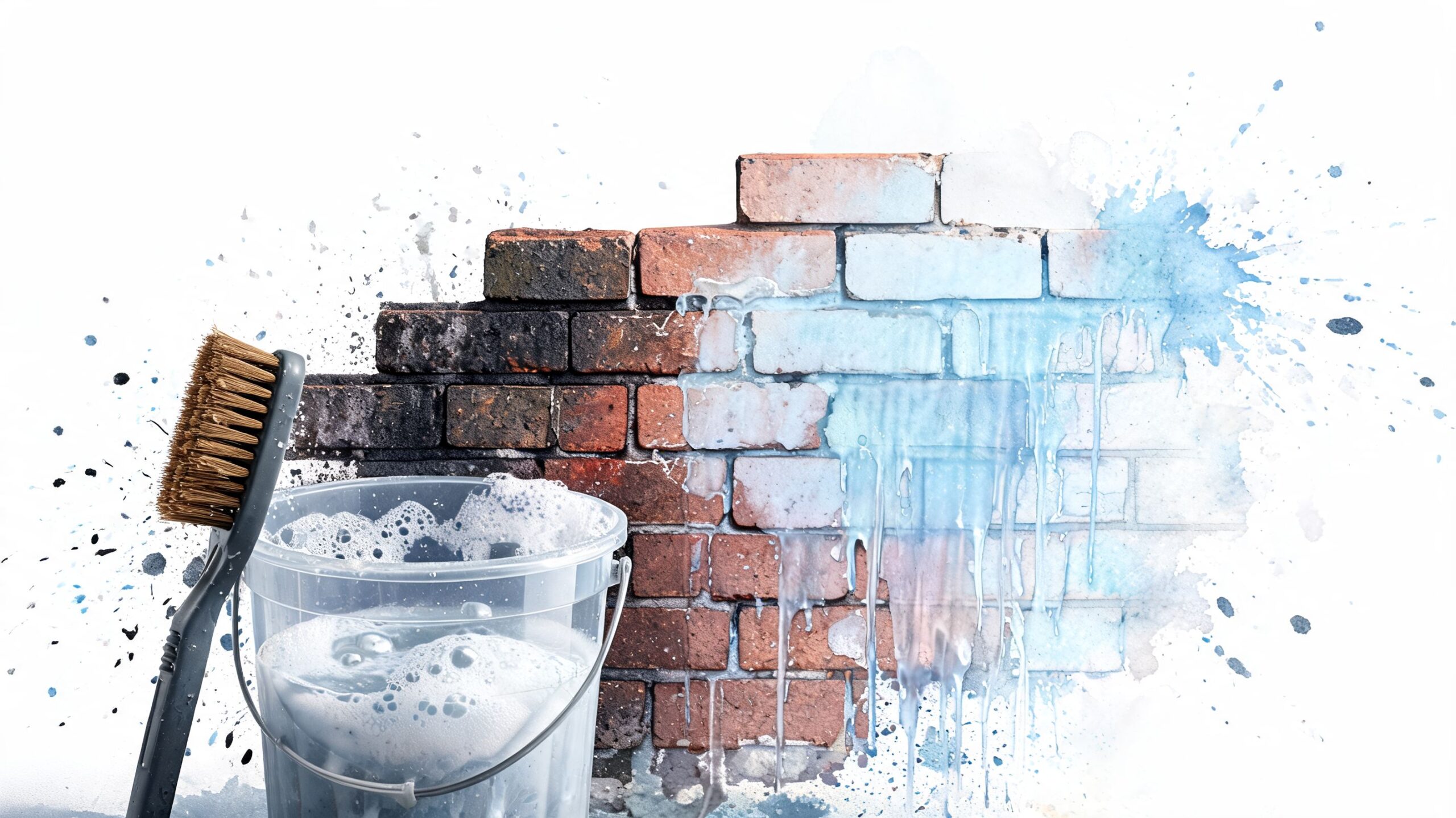
Interior brick and exterior brick need different levels of cleaning, but both need to be clean. Dust, soot, grease, chalky residue, cobwebs, and salts all interfere with adhesion.
For interiors, that often means vacuuming, scrubbing with an appropriate prep cleaner, and working a stiff brush into mortar joints. Fireplaces need extra attention because soot can bleed through weak systems.
For exteriors, pressure washing is usually the right starting point. The target isn't just visible dirt. It's removing the material that stops primer from bonding into a porous surface.
A few things matter here:
- Use enough pressure: The verified guidance allows for 2000 to 3000 PSI depending on the condition and location of the wall.
- Don't flood weak masonry: Older or damaged brick can be cleaned aggressively enough to remove grime but not so aggressively that joints are blown out.
- Treat efflorescence seriously: If salts keep returning, find the moisture path first.
If you're checking moisture issues around lower brickwork, blocked drainage points can also be part of the problem. This practical guide to brick weep holes from Awesim Building Consultants is worth reading before painting over symptoms.
Repairs that can't be skipped
Once the wall is clean, the defects become obvious. That's when proper repair starts.
Cracks in mortar joints, failed pointing, chips, and local damage need patching with the right masonry-compatible products. The verified data notes that cracks over 2 mm should be repaired, and untreated cracks were linked to a 40% peeling failure rate within 2 years in a Master Painters Victoria survey cited in the brief.
A paint job on brick is only as stable as the mortar holding the wall together.
Typical repair work includes:
- Raking out loose material from failed joints.
- Filling cracks and local voids with an acrylic mortar repair product suited to brick and masonry.
- Replacing badly damaged sections where patching won't hold.
- Allowing repairs to cure fully before primer goes anywhere near them.
A homeowner can do some of this carefully, but most under-estimate the time. Good prep is slow. It's one reason a structured process like this step-by-step wall preparation guide matters before any paint system is chosen.
Here's a useful visual overview of prep in action:
Drying matters more than most people think
Brick can look dry and still hold moisture. That catches a lot of DIY jobs out, especially in shaded areas, south-facing walls, and interiors with poor airflow.
The verified methodology calls for a 48-hour dry time after washing. In practice, some walls need longer. A moisture meter removes guesswork. If moisture is still moving through the wall, primer and paint can trap it, and the finish starts failing from behind.
Choosing the Right Primer and Paint for Masonry
The wrong product system can undo good prep. Brick needs a coating that can grip a porous mineral surface, tolerate alkalinity, and suit the location. An interior feature wall in a Docklands apartment has different demands from an exterior boundary wall facing rain and summer sun.
Why masonry primer matters
Primer isn't optional on brick. It does several jobs at once. It seals uneven porosity, helps block staining, improves topcoat adhesion, and reduces the patchy absorption that makes brick look cloudy after painting.
Older brick is where this matters most. Mortar, previous contamination, and variable porosity all fight for a different amount of paint. A dedicated masonry primer gives you a more controlled surface before the finish coats go on.
For homeowners unsure what primer does, this plain-English guide on paint primer basics is useful background before comparing products.
Best paint types for interior and exterior brick
For interior brick, a quality acrylic system is usually the practical choice. It gives workable adhesion, decent breathability, and a finish that can be cleaned without looking plasticky if the right sheen is chosen.
The verified data for this brief notes that for interior projects such as apartment feature walls, Taubmans Endure can achieve 98% opacity in two coats and resist alkali burn, which is relevant because 35% of pre-1990 Victorian bricks in that dataset are described as prone to alkali-related issues. The same verified dataset also states that professionally painted brick interiors were associated with stronger perceived value in pre-sale presentation.
Exterior brick needs a tougher decision. Standard interior wall paint doesn't belong outside, and cheap trade-offs usually show up quickly on masonry. Exterior acrylic masonry systems are the usual baseline. On some walls with fine movement or lots of hairline texture, more specialised exterior systems may be worth considering.
Sheen choices that actually make sense
Sheen changes how the wall looks and how it wears.
| Finish | Where it works | What to expect |
|---|---|---|
| Flat | Some heritage-style interiors, low-contact feature walls | Soft look, hides irregularity, marks more easily |
| Low sheen | Most interior brick walls, many exterior walls | Best balance of washability and a natural masonry look |
| Semi-gloss | Fireplaces, some utility areas, selected details | More durable and easier to wipe, but highlights texture and repairs |
Material call: On brick, lower sheen usually looks more natural. Higher sheen makes every joint, patch, and ripple more obvious.
For larger repaints, this is also where interior and exterior work start to overlap with broader planning. A feature wall might sit inside an interior painting service, while a full façade belongs in an exterior house painting scope. The coating system should match the job, not just the colour chart.
Application Methods Brush Roller or Sprayer
How the paint goes on affects speed, coverage, and finish quality. Brick is textured, jointed, and absorbent, so the application method matters more than it does on a flat plaster wall.

Brick Painting Methods Compared
| Method | Best For | Speed | Finish Quality |
|---|---|---|---|
| Brush | Edges, corners, deep mortar lines, detailed brick texture | Slow | Very thorough in tight areas |
| Roller | Interior feature walls, smoother brick, medium-sized areas | Moderate | Good if nap length suits the texture |
| Sprayer | Large exterior walls and broad open areas | Fast | Very uniform when masking and technique are done properly |
A brush gives the most control. It's useful for cutting in, pushing primer into awkward joints, and working around trims, windows, fireplaces, and feature details. It's also the slowest method by a long way.
A roller is the practical middle ground for many homeowners. On brick, short-nap rollers don't do enough. You need a longer nap that can reach into the profile. Even then, some joints will still need a brush.
Why one method rarely does the whole job
Spraying is the fastest way to cover large masonry surfaces, especially exteriors. It's also the easiest method to get wrong if masking is poor or the operator moves too fast. Overspray on windows, paths, roofing, fences, or neighbouring property turns a painting job into a cleanup job.
The verified data for exterior brick in Melbourne states that spray application achieved a 92% success rate compared with 75% for brushing in Haymes Australia trials cited in the brief. That doesn't mean brushing is bad. It means spray application can produce more even penetration and coverage when the wall, weather, and operator all cooperate.
Most solid brick jobs use a combination:
- Brush for cutting in and problem areas
- Roller for working paint into texture where needed
- Sprayer for broad coverage on suitable exteriors
- Back-rolling after spraying when the surface profile needs better worked-in coverage
That combination is usually what separates a quick colour change from a durable coating system. If you're comparing your own time, tool hire, masking effort, and risk of redo, it's worth getting a written quote and seeing how a professional approach stacks up.
Weather Drying Times and Finishing Touches
Melbourne weather doesn't care what day you booked off to paint. Exterior brick can be perfect at breakfast and a bad idea by mid-afternoon. That's one reason scheduling matters so much on masonry.

Melbourne weather can ruin good prep
The verified data for this brief states that painting in humidity above 80% RH leads to a 60% failure rate within three years according to the Victorian Building Authority. That's the sort of number that explains why timing isn't a minor detail.
Humidity affects drying. Direct hot sun can make products flash off too quickly. Sudden temperature drops, overnight moisture, and rain arriving before proper set can all spoil adhesion and finish quality.
Good exterior timing usually means:
- Avoiding very humid days
- Avoiding rain windows that are too tight
- Keeping off hot wall faces at the peak of the day
- Following product-specific recoat times instead of guessing
Brick rewards patience. Most weather-related failures start with someone trying to squeeze the job into the wrong day.
Dry time isn't the same as full cure
Paint can feel dry to the touch long before it's properly cured. That matters on brick because the surface profile holds more product and dries unevenly across mortar and face brick.
A proper system is usually primer plus two topcoats. That isn't overkill. It's what gives colour depth, better uniformity, and a stronger film build across a highly absorbent surface.
For interiors, let the wall sit without heavy scrubbing while it cures. For exteriors, don't assume the job has reached full toughness just because it looks finished.
The finish lasts longer with simple maintenance
Painted brick doesn't need complicated upkeep, but it does need sensible care.
- Wash gently: A soft wash removes dust and grime without wearing the coating.
- Watch for moisture signs: New staining, bubbling, or recurring salts point to a wall issue, not just a paint issue.
- Fix local damage early: Small chips and failed joints are easier to address before water gets behind them.
For owners who'd rather avoid managing all those variables themselves, some contractors build weather planning, staged preparation, and a workmanship warranty into the scope. In practice, that's often where the value sits.
When to Hire a Professional Painter in Melbourne
Some brick painting jobs are manageable for a careful homeowner. A small interior feature wall in good condition can be done if you prep properly, choose the right system, and give it time. Plenty of people start there.
The trouble starts when the wall is bigger, older, dirtier, higher, heritage-controlled, or exposed to weather. That's where the hidden parts of the job become the actual job.
DIY makes sense sometimes
DIY can be reasonable if all of these are true:
- The wall is indoors
- There's no moisture issue
- The brick is sound and already cleanable
- Access is simple
- You're willing to spend serious time on prep, masking, and cure times
If any one of those falls away, the job gets less forgiving.
Professional help makes more sense on these jobs
Heritage homes are the clearest example in Melbourne. The verified data provided for this article states that Heritage Victoria guidelines often mandate permeable paints for heritage homes, and 68% of heritage owners reported project delays due to using the wrong materials. If the house sits in a heritage area, exterior brick painting may involve permits, council expectations, and breathable systems such as limewash or silicate paint rather than a standard masonry coating.
That's not the only reason to bring in a painter. A professional quote should also clarify:
| What to check | Why it matters |
|---|---|
| Prep included | Brick fails early when cleaning and repairs are skimmed over |
| Paint system listed | You want the actual primer and topcoat specified |
| Access and masking | Spraying brick involves more protection than many expect |
| Schedule | Exterior brick depends heavily on weather windows |
| Warranty | Clear workmanship cover gives you recourse if application goes wrong |
A practical option in Melbourne is working with an insured local team that can inspect the substrate before committing to a system. Newline Painting is one example. The company operates across Melbourne, provides clear written quotes, uses recognised paint brands, and offers a 7-year workmanship warranty on eligible work. If you're comparing local contractors, this page for painters near you in Melbourne is a useful starting point for checking service fit and location coverage.
For larger repaints or heritage-related advice, it also helps to review who you're dealing with and ask direct questions before booking. The About page and contact page should tell you quickly whether the painter is set up for this kind of work.
Frequently Asked Questions About Painting Brick
Can you paint interior brick without sanding?
Usually, yes. Brick normally needs thorough cleaning, dust removal, repairs, dry time, and a proper masonry primer more than it needs broad sanding. Local rough spots or previous loose coatings may still need abrasion.
How many coats does brick need?
For most jobs, think in systems rather than just coats. On brick, that usually means one suitable primer and two topcoats so the finish looks even across both brick faces and mortar joints.
Can painted brick still breathe?
It depends on the coating. Standard masonry systems and heritage-compatible breathable products behave differently. On older homes, especially heritage properties, breathability can be a deciding factor in what product is appropriate.
Is painting brick reversible?
Not in a practical way. You can repaint it, but returning painted brick to its original clean natural state is usually difficult, expensive, and sometimes unrealistic.
What's the biggest mistake homeowners make?
Starting before the wall is ready. Brick painting fails when people paint over dirt, moisture, salts, weak mortar, or the wrong substrate for the product they bought.
Is painted brick worth it before selling?
Often, yes, if the brick is making the home feel tired and the rest of the presentation is being updated as well. It tends to work best as part of a broader pre-sale tidy-up rather than as a standalone cosmetic fix.
If you're weighing up how to paint brick walls and want a clear view of what your own home needs, Newline Painting can arrange a free on-site quote across Melbourne. That gives you a practical assessment of the brick condition, prep required, suitable paint system, likely timing, and whether the job is worth doing now or after other repairs.